Venues
Where Guests Actually Stand Between the Parts of the Day
The gap between ceremony and meal is the longest unstructured stretch of a wedding. Whether it works depends almost entirely on the space the venue provides for it.
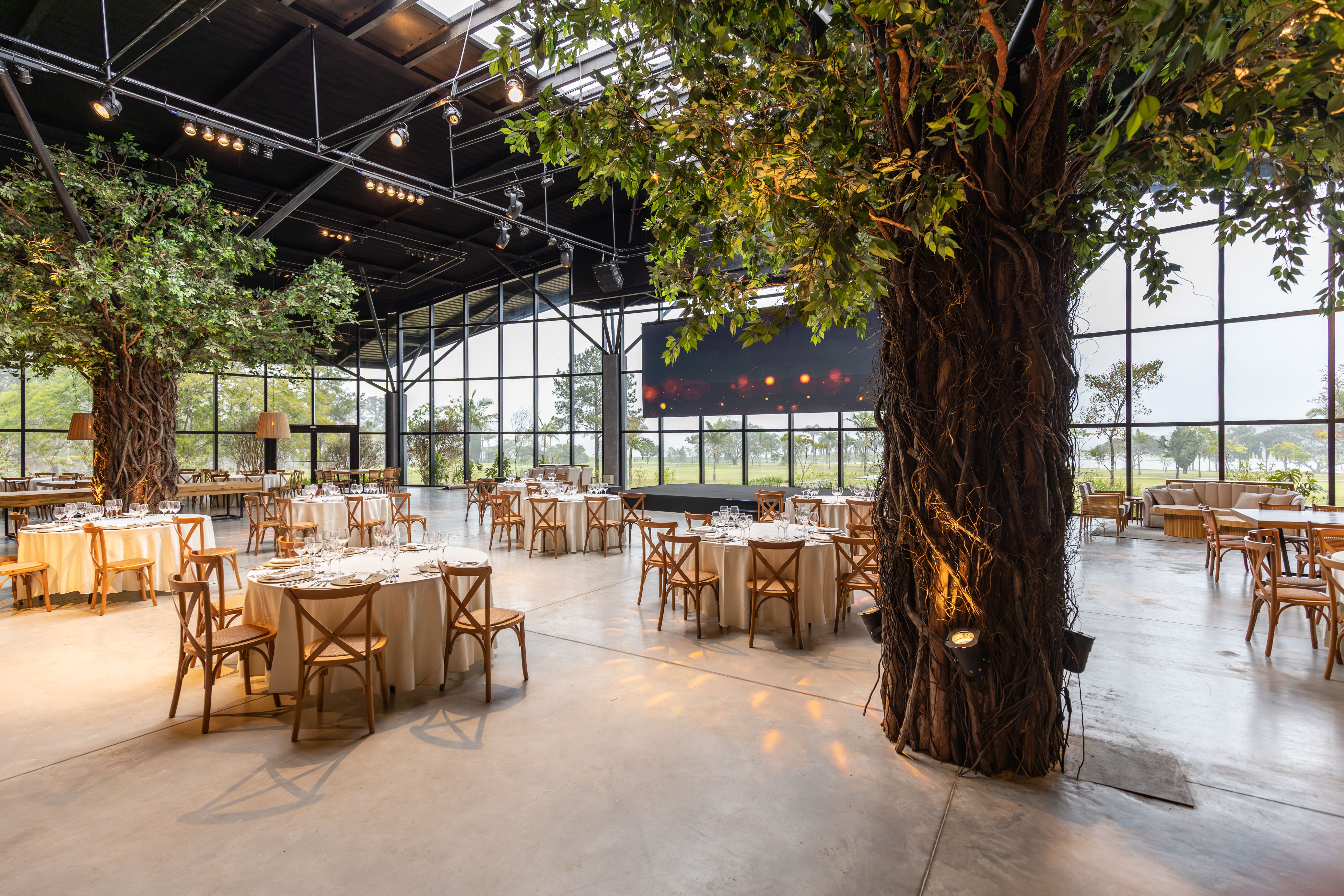
Every wedding has a period where the formal elements have paused and guests are simply present. It is often the longest single block of the day.
The gap exists for operational reasons
After the ceremony, photographs are taken and the room used for the ceremony frequently has to be reset for dining.
Both take time, and neither can happen with guests in the way. The drinks reception is what fills that interval.
Because its length is set by work happening elsewhere, it is also the part of the day most likely to stretch beyond what was planned.
An hour of standing is a physical demand
Guests in formal clothing and unfamiliar shoes are standing on hard ground, often outdoors, without having eaten since morning.
Seating for a fraction of the group changes this substantially, and it is what older guests and anyone with limited mobility depend on.
The same period is when guests are most likely to be in direct sun or in wind, so shelter of some kind is not a decorative consideration.
The space determines whether people mix
A long narrow space keeps guests in the groups they arrived in, because there is no natural circulation. People stay where they stopped.
An open space with a bar and food at different points produces movement, and movement is what causes guests who do not know each other to meet.
This is the practical argument for spreading drinks and canapé service across a space rather than concentrating everything at one table.
Two spaces are better than one
Venues that offer an indoor and an outdoor area for this period cope with far more situations, because the weather decision does not have to be made in advance.
It also gives guests a choice. Some want sun, some want shade, and some want to sit somewhere quieter than the main group.
Where only one space exists, the wet weather plan has to relocate the whole reception, which usually means occupying the room being prepared for dinner.
The couple is absent for most of it
This is the stretch where the couple is being photographed, so the guests are unsupervised for the longest period of the day.
That makes it the moment when clear signage, visible staff and an obvious bar matter most. Guests cannot ask the hosts because the hosts are elsewhere.
Couples who want to spend some of it with their guests have to build that into the photography schedule explicitly, because otherwise it consumes the entire gap.
Questions readers ask
Is a package always more expensive?
Not once you cost everything a blank canvas requires, including hire, staffing, facilities and coordination. The comparison only works when both are fully costed.
Can we use a blank canvas venue without a coordinator?
It is possible with enough time and a reliable group of helpers, but somebody has to run the setup and the day. If that person is you, plan on being unavailable for most of your own morning.