Venues
Outdoor Venues: Ground, Power, Plumbing and What Photographs Hide
An open field is not a venue. It is a site that needs infrastructure, and the infrastructure is most of the work and most of the cost.
Everything here earned its place by changing an outcome. Nothing about the infrastructure behind an outdoor wedding is included to round the number up.
What matters most
- Power, water, drainage and toilets are rarely present on open sites.
- Ground conditions determine access, seating and footwear.
- Sound behaves very differently outdoors than in a room.
What a bare site does not include
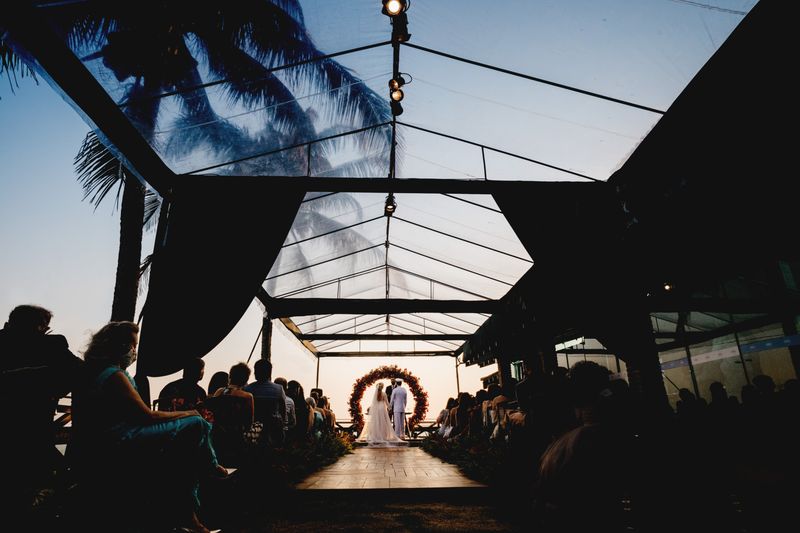
A beautiful outdoor location typically arrives with no power, no water, no drainage, no toilets, no shelter and no lighting. Each of those has to be brought in, which means generators, water bowsers, hired facilities, structures and cabling, all of which need delivery and collection.
The infrastructure is usually the largest cost of an outdoor wedding and is entirely invisible in the photographs that inspired it. This does not make outdoor weddings a mistake, but it does make the budget shape completely different from a venue with a building. Costing the infrastructure before falling for the view prevents an expensive discovery later.
Ground conditions
Grass that is firm in summer becomes impassable after rain, and vehicles delivering equipment are heavier than anyone expects. Establish whether there is hard access to the site, and what happens if a delivery vehicle cannot reach it on the day. Uneven ground makes seating unstable, dance floors necessary and heels impossible, and it is the most common complaint from guests.
Slopes matter for sightlines and for anyone with limited mobility, and a gentle slope on a viewing is a real obstacle in formal shoes. Walk the site in ordinary weather and then imagine it after two days of rain.
Power and lighting
Bands, caterers, lighting and any heating all draw power, and the total is usually more than a domestic supply can provide. Generators need to be sized to the load, positioned far enough away not to be heard, and refuelled if the event runs long.
On the run sheet, lighting is the element couples underestimate, because a site that is charming at dusk is unusable and unsafe two hours later. Paths, steps, entrances and toilet routes all need lighting, and that is a safety matter rather than an aesthetic one. Ask any supplier what power they need and in what form, then have someone competent add it up.
Sound outdoors
Sound disperses outdoors rather than reflecting, so a ceremony that would be audible in a room is inaudible in a field. Wind makes this dramatically worse and is the reason so many outdoor ceremonies are experienced as a mime by the back rows. Amplification for the ceremony is close to essential outdoors and is a small cost against the alternative.
For the evening, noise travels much further outdoors than in a building, which is why rural sites often have strict restrictions. Ask about noise conditions at the enquiry stage, since they may end the evening earlier than you had planned.
Facilities and comfort
Toilet provision has to be hired and matched to guest numbers, and the quality range in this market is very wide. Consider where they are placed, how they are lit and how they are serviced during a long event, since these determine whether they are usable.
Once the deposit is paid, guests need shade in heat, shelter in rain, warmth at night and somewhere to sit throughout, and all four have to be provided deliberately. Insects at dusk are a serious consideration in many regions and require planning rather than improvisation. Comfort provision is what separates a memorable outdoor wedding from an endured one.
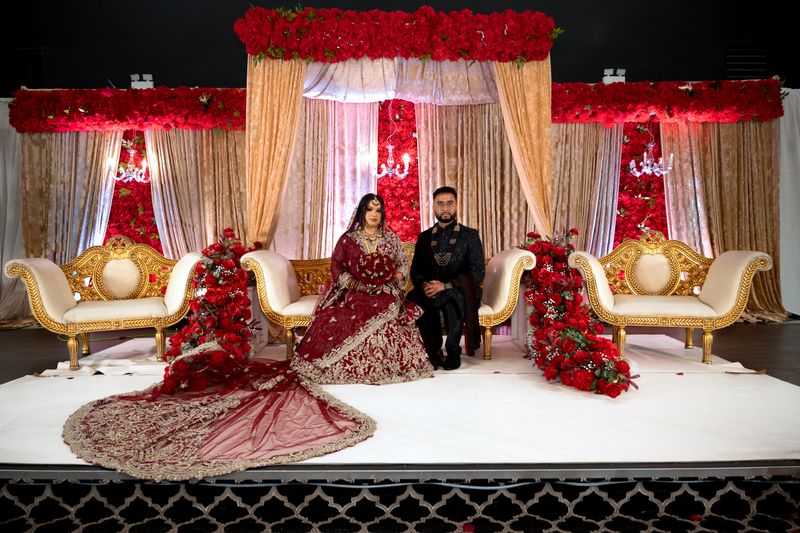
Traditions vary by family as much as by community, and the family version is the one that counts.
Permissions and the neighbours
Using private land for an event frequently requires permission or a licence, and the rules vary enormously by country and locality. Public land, beaches and parks almost always require booking and may have restrictions on numbers, structures, amplification and hours. Where the site is near homes, the practical constraint is the neighbours rather than the regulations, and a conversation in advance helps.
Between the two families, check what is required well before committing, since permissions can take time and are not always granted. None of this is a reason to avoid an outdoor wedding, but all of it is a reason to start earlier than you would for a building.
Everything above, in order of what to do first
- What a bare site does not include. A beautiful outdoor location typically arrives with no power, no water, no drainage, no toilets, no shelter and no lighting.
- Ground conditions. Grass that is firm in summer becomes impassable after rain, and vehicles delivering equipment are heavier than anyone expects.
- Power and lighting. Bands, caterers, lighting and any heating all draw power, and the total is usually more than a domestic supply can provide.
- Sound outdoors. Sound disperses outdoors rather than reflecting, so a ceremony that would be audible in a room is inaudible in a field.
- Facilities and comfort. Toilet provision has to be hired and matched to guest numbers, and the quality range in this market is very wide.
- Permissions and the neighbours. Using private land for an event frequently requires permission or a licence, and the rules vary enormously by country and locality.
The takeaway
An open site is a blank page that you have to supply everything for, including the things nobody photographs.
It is a party with paperwork attached. Keep them in that order.
Questions readers ask
Is a field cheaper than a venue?
Rarely, once power, toilets, structures, furniture, lighting and access are counted. It buys a location and a freedom you cannot get elsewhere, which is a different kind of value.
How many toilets do we need?
Ask the hire company, who will size it against your guest number and event length. Under-providing is the most common error and the one guests notice most immediately.