Ceremonies & Rituals
Inside a Hindu Wedding: the Fire, the Steps and How Much Varies by Region
There is no single Hindu ceremony. There is a family of rites sharing certain elements, and the differences between communities are substantial rather than cosmetic.
There is a settled way of talking about the structure of a Hindu wedding ceremony. It is worth asking how much of it survives contact with the detail.
The argument in brief
- Regional and community practice differs greatly across India and the diaspora.
- The sacred fire acts as witness in many but not all traditions.
- The saptapadi is treated as decisive in many communities.
Why there is no standard version
Hindu practice spans many regions, languages, communities and sects, and wedding rites differ accordingly in length, sequence and emphasis. A ceremony in a Tamil family, a Bengali family and a Punjabi family will share some elements and diverge substantially in others.
Length varies from a rite of a few hours to one spread across several days of connected ceremonies. The right authority for your own wedding is your family's priest and your elders, who know what your community actually does. Anything written in general terms, including this article, describes a pattern rather than a prescription.
Before the ceremony begins
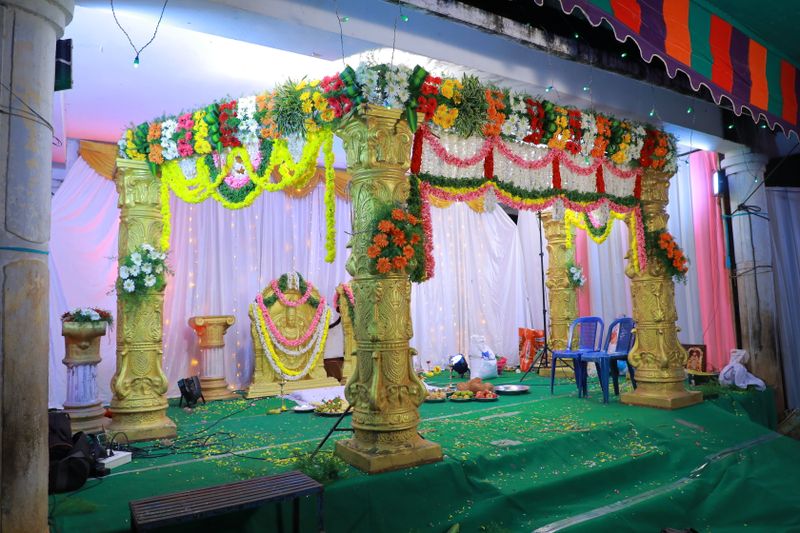
Many families set the date and time by astrological calculation, and the resulting muhurat can fall at hours that surprise those unfamiliar with it. Ceremonies commonly open with an invocation of Ganesha, who is invoked at the beginning of undertakings, and often of a family or regional deity. A mandap, a canopied structure, is erected for the ceremony in many traditions and is where the central rites take place.
On the day itself, preparatory rites in the days before may include applying turmeric paste, henna and other observances that differ by community. The priest, often called a pandit or purohit, recites in Sanskrit, and many families now ask for explanation in a language guests understand.
The central rites
The sacred fire, agni, is present in many traditions and functions as the witness before whom the marriage is made. In numerous North Indian traditions the bride's father or guardian performs kanyadaan, and practice around this rite varies and is sometimes reconsidered by families today.
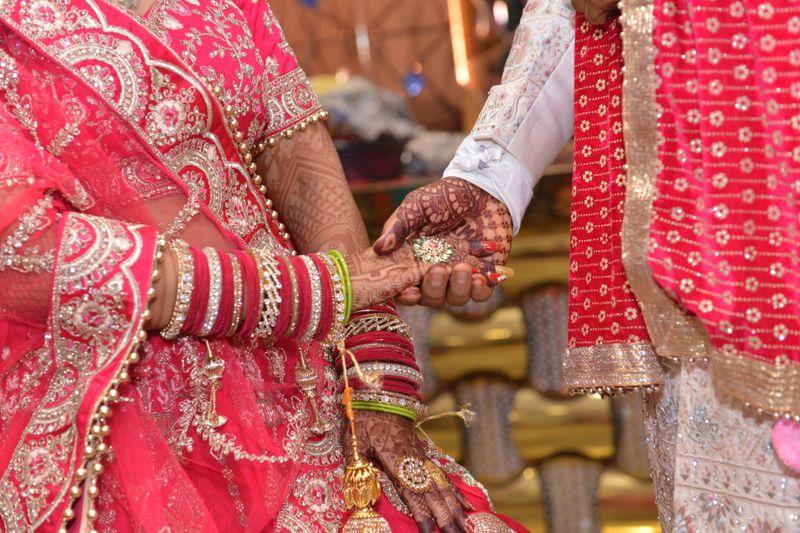
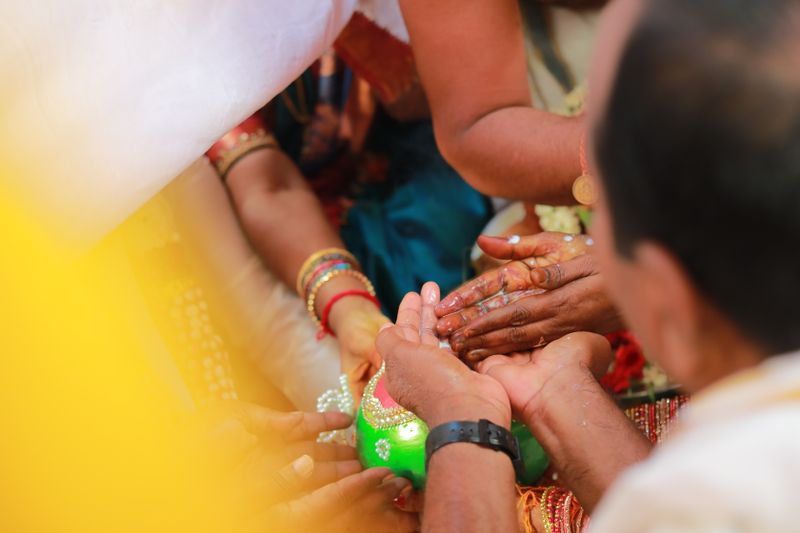
Between the two families, panigrahana, the taking of the hand, and the offerings made into the fire, including the laja homa in which grain is offered, appear widely. The couple circle the fire a number of times, commonly four or seven depending on the tradition, and this is often called the pheras. The saptapadi, seven steps taken together with a vow attached to each, is treated in many communities as the moment the marriage is complete.
Regional differences worth knowing
In several South Indian traditions the tying of a thali or mangalsutra around the bride's neck is the central and decisive act. Some Kerala Hindu ceremonies are notably brief, while ceremonies in other communities extend across a long morning or several days.
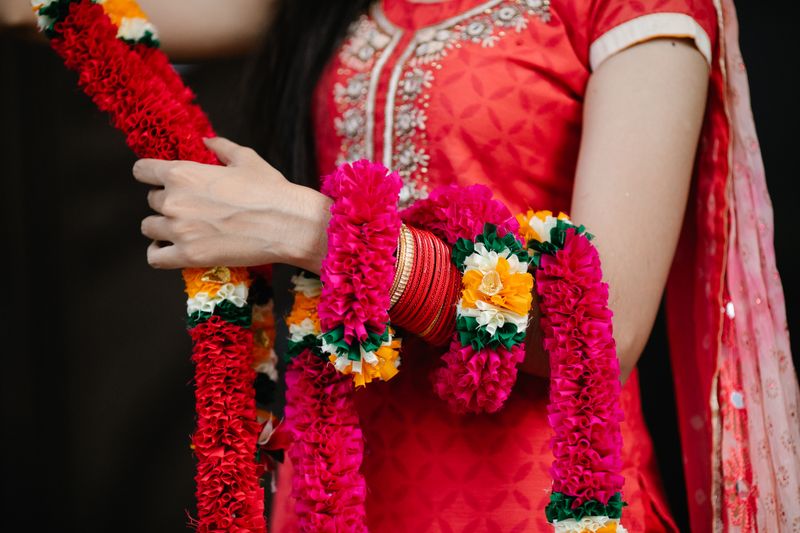
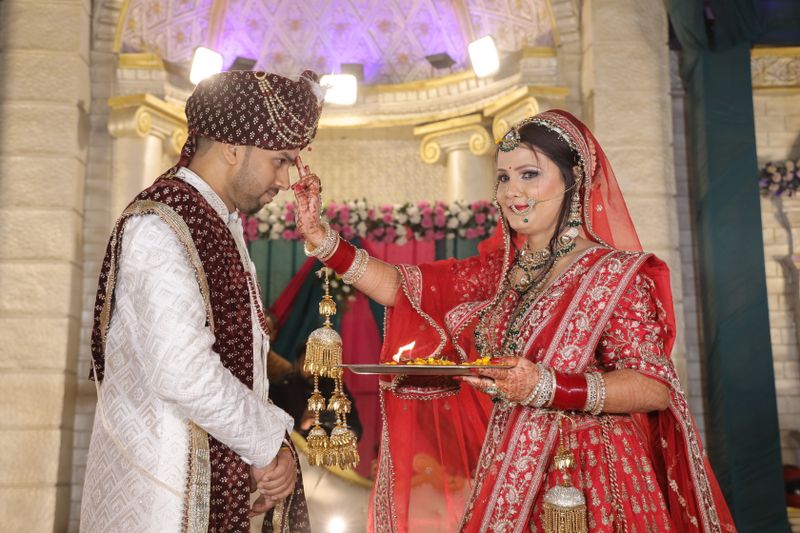
The garlanding of each other, the jaimala or varmala, is widespread but occupies different positions in different sequences. Applying sindoor and giving a mangalsutra are practised in many communities and not in others, and their meanings are not identical everywhere.
Assuming that one region's practice is the Hindu way is the most common error made by guests and by those marrying into a family.
Attending or marrying into one
Guests are generally welcome and are not expected to participate in the rites, though standing and sitting follow the room. Ceremonies can be long, may begin early and often run to their own timing rather than a published schedule, and this is normal rather than disorganised. Ask about footwear, head covering and dress, since expectations vary by venue and community and people are happy to be asked.
Six months out, if you are marrying into a Hindu family from another tradition, ask what each rite means rather than only what you should do. Understanding the meaning is what makes participation feel like taking part rather than performing.
Nobody executes the plan exactly, and guests do not notice the parts that slipped.
Explaining it to your guests
A ceremony conducted in Sanskrit is opaque to most guests, and a short printed explanation transforms their experience of it. Explain the sequence, name the main rites and say in one line what each is doing, without attempting a theological treatment.
Many families now ask the priest to give brief explanations aloud between sections, which works well when agreed in advance. Say plainly how long it will run and when guests may sit, move or step outside, since uncertainty is what makes long ceremonies difficult. This costs nothing and is consistently the thing guests from other traditions mention afterwards.
The takeaway
Ask your own family's priest what your community does, because the general pattern is not the same as your ceremony.
Protect the hour you will actually remember and let the rest be approximate.
Questions readers ask
Is kanyadaan a required part of a Hindu wedding?
It appears in many traditions, particularly in the north, and is absent or differently framed in others. Some families today discuss its meaning and adapt it, and that conversation is best had with your own priest and elders.
Why do Hindu weddings often start very early?
Many families choose the time by astrological calculation, and the auspicious window may fall in the early morning. It is the ceremony fitting the calculated time rather than a scheduling preference.