Venues
Exclusive Use, Shared Buildings and What You Are Actually Buying
The phrase means different things at different venues, and the difference determines whether the day feels like yours or like a booking.
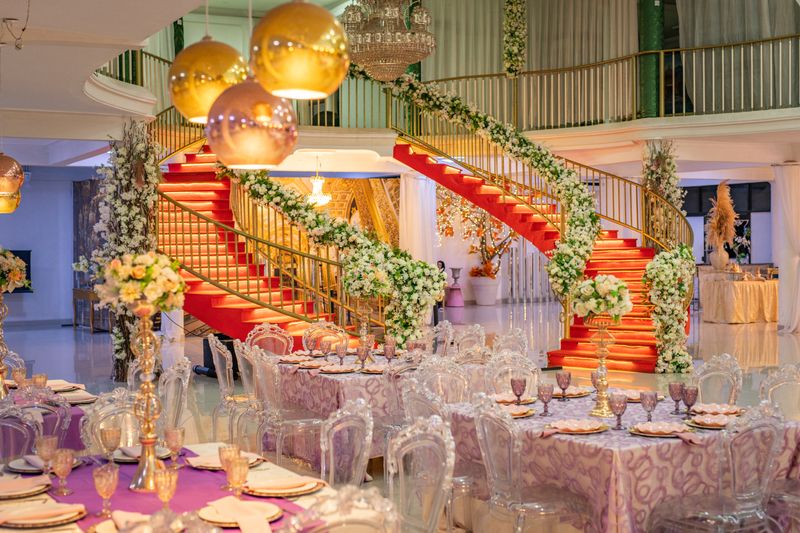
This works through exclusive use of a wedding venue in the order the parts actually depend on each other.
The short version
- Exclusive use may cover only certain rooms or certain hours.
- Shared buildings can work well if the boundaries are clear.
- Ask specifically what other bookings are possible on your date.
What the term can mean
At some venues exclusive use means the entire site and grounds are yours for the whole hire period with no other guests present. At others it means a defined set of rooms, with the rest of the building continuing to operate normally, including for the public.
It may also be limited by hours, so a building that is exclusively yours in the evening may be open in the afternoon. The word carries a premium in most markets, which makes it worth establishing exactly what the premium buys. Ask for the definition in writing rather than accepting the phrase, since almost every dispute here comes from an unexamined assumption.
When sharing is genuinely fine
A hotel with a dedicated function wing can host your wedding perfectly well while ordinary guests use the rest of the building. The questions are whether your guests and other guests share an entrance, a bar, a car park or a set of toilets. If the separation is clean, sharing costs you very little and usually saves a meaningful amount of money.
It can also be an advantage, since accommodation on site is simpler and guests who want to leave early have somewhere to go. The problems arise from ambiguity rather than from sharing itself.
Two weddings in one building
Some venues host more than one wedding on the same day, in different spaces, and this is not necessarily a problem if managed properly. It becomes one when arrival times coincide, when photographs compete for the same garden, or when the staff are stretched between two events.
On the run sheet, ask how the venue separates them, how staffing is allocated and whether the timings are deliberately staggered. Ask also whether the other event can be booked after yours, since a venue may commit to nothing at the time you sign. If it matters to you, get the position stated in the contract rather than described on the viewing.
Accommodation on site
Where a venue includes rooms, establish how many are yours, at what rate, and by when guests must book them before they are released. Some contracts require you to take a minimum number of rooms, which is a real commitment if your guests choose to stay elsewhere. Find out the checkout time the following morning, since a wedding that ends late and a checkout that is early is an unkind combination.
Ask where the couple's own room is relative to the noise, which is a small detail that affects the end of a long day.
On-site accommodation is a significant convenience for guests and worth weighing against other venue qualities.
The cost of exclusivity
Full exclusive use usually means a minimum spend, a higher hire fee or a requirement to book the whole site including rooms. That is a fair exchange if privacy genuinely matters to you or if your celebration spans more than one day.
Between the two families, for a single afternoon and evening in a well-separated function space, the premium may buy very little you would notice. Consider what your guests would actually experience differently, which is the practical test rather than the principle. Some couples find that a shared venue with clear boundaries funds a much better wedding within it.
Traditions vary by family as much as by community, and the family version is the one that counts.
Multi-day and cultural considerations
Where a wedding runs over several days, exclusivity becomes far more valuable because setup persists between events. Ceremonies involving fire, extended music, early morning rituals or large processions frequently need a site that is not simultaneously serving others. Some venues are unfamiliar with these requirements, so ask directly whether they have hosted your kind of ceremony before.
On the day itself, a venue that has done it will answer with practical detail; one that has not will answer with reassurance. The difference between those two answers is worth listening for carefully.
The takeaway
Ask what exclusive use excludes, and the word starts meaning something specific.
It is a party with paperwork attached. Keep them in that order.
Questions readers ask
Can a venue book another wedding after we have signed?
Unless the contract prevents it, frequently yes. If a second event on your date would matter to you, ask for the position to be written in rather than relying on what you were told.
Is exclusive use worth the extra cost?
It depends on whether your guests would notice the difference. For a multi-day celebration or a ceremony with unusual requirements it often is; for a single evening in a separate wing it often is not.