Venues
What a Marquee Actually Requires Before Anyone Sees the Inside of It
The structure is the visible part and often the smaller part. Flooring, lining, power, heating and ground conditions are the rest of the decision.
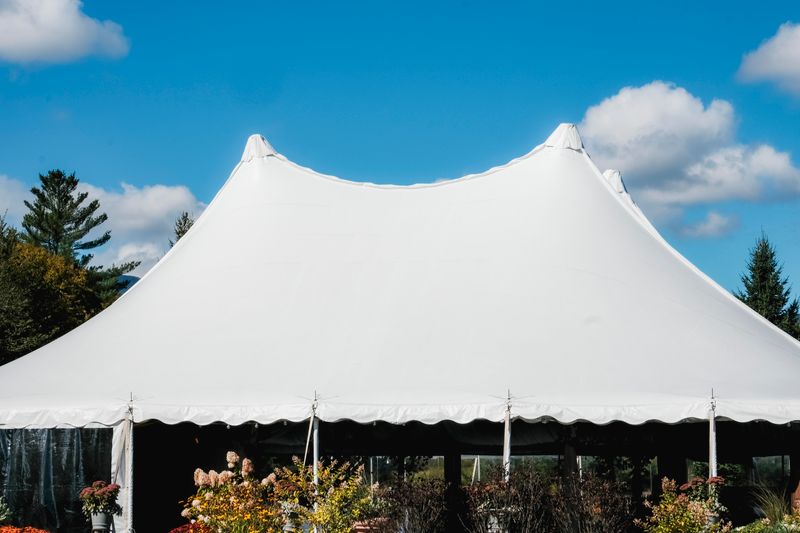
The points below about marquees and temporary structures are ordered by how much difference they make, not by how often they get repeated.
What matters most
- Ground condition determines which structures are possible.
- Heating, lighting and flooring are usually separate from the structure hire.
- Setup and takedown occupy days rather than hours.
Types and what they need underneath
Traditional pole structures are anchored into the ground and therefore need earth that will take stakes, which rules out hard standing. Frame structures stand on their own and can be weighted, which makes them usable on ground where anchoring is impossible. Stretch structures and other modern forms have their own requirements and their own limits in wind and rain.
The supplier will tell you which is possible once they have seen the site, which is why a site visit precedes any quote worth having. Choosing the look before checking the ground is the standard way to get an unwelcome answer.
Everything that is not the tent
Flooring is usually separate and is not optional on grass, since a floor is what makes the space usable after rain and safe in heels. Lining, lighting, heating, power distribution and sometimes air movement are all separate items with separate costs.
Once the deposit is paid, furniture, bars, kitchens and toilets are separate again and frequently come from different suppliers with different schedules. Ask for a quote that includes everything needed to hold an event in it, rather than a quote for the structure alone. The first figure quoted for a marquee is rarely the figure it costs to use one.
Heating, cooling and weather
Temporary structures lose heat quickly and gain it just as fast, so both heating and ventilation are usually required rather than optional. Heaters need fuel, positioning and safety clearance, and they are noisier than most couples expect when running through a speech. In hot climates, ventilation and shade matter more than the structure itself, and a closed tent in the sun becomes unusable.
Wind is the condition that determines whether a structure can safely be used, and suppliers have thresholds they will not cross. Ask what conditions the structure is rated for and what the supplier's own policy is if those conditions arrive.
Access, setup and time on site
Erecting a structure takes days rather than hours, and dismantling takes more time again, both of which need site access. That means the land is occupied for a period around your wedding, which matters if it belongs to somebody with other uses for it. Delivery vehicles are large and heavy and need a route in, which is the constraint that most often rules out an otherwise perfect site.
On the run sheet, weather during setup affects the ground for the wedding itself, so a wet week beforehand is a real risk even if the day is fine. Build the setup and takedown days into your plan as events in their own right, with someone responsible for each.
Where it all sits on the site
Position determines the view, the light, the wind exposure and the length of every cable and pipe running to it. Kitchens, generators and toilets need to be near enough to work and far enough away not to be heard or smelled. The route guests take from parking to the structure needs to be firm, lit and short, particularly in the dark and in bad weather.
On the run sheet, think about where cars go, since a field used for parking becomes unusable after rain and blocks access for suppliers. A site plan drawn with the supplier before the day resolves all of this in an hour.
Traditions vary by family as much as by community, and the family version is the one that counts.
Whether it is the right answer
A marquee makes sense when the location is the point, when you need a large blank space, or when no building nearby will do. It makes less sense as a way to save money, since a fully equipped structure frequently costs as much as a venue that already has walls.
For a home wedding it can be excellent, because the site is free and the household absorbs some of the logistics. For a remote site with no infrastructure, it is one component of a much larger build rather than a solution in itself. Deciding what problem the structure is solving keeps the rest of the decisions coherent.
Everything above, in order of what to do first
- Types and what they need underneath. Traditional pole structures are anchored into the ground and therefore need earth that will take stakes, which rules out hard standing.
- Everything that is not the tent. Flooring is usually separate and is not optional on grass, since a floor is what makes the space usable after rain and safe in heels.
- Heating, cooling and weather. Temporary structures lose heat quickly and gain it just as fast, so both heating and ventilation are usually required rather than optional.
- Access, setup and time on site. Erecting a structure takes days rather than hours, and dismantling takes more time again, both of which need site access.
- Where it all sits on the site. Position determines the view, the light, the wind exposure and the length of every cable and pipe running to it.
- Whether it is the right answer. A marquee makes sense when the location is the point, when you need a large blank space, or when no building nearby will do.
The takeaway
Quote the whole build, not the tent, and check the ground before you choose the shape.
Protect the hour you will actually remember and let the rest be approximate.
Questions readers ask
When should a marquee be booked?
Early, because good suppliers are seasonal and the site visit has to happen before the quote. It also sets constraints on everything else, so a late decision leaves other bookings provisional.
Do we need flooring?
On grass, almost always. It keeps the space usable if the ground is wet, makes seating stable and prevents the surface being destroyed by several hundred footfalls.