Venues
Getting a Hundred Guests Into and Out of a Venue
Arrival and departure are the venue decisions couples inspect least. Access, parking and the exit at closing time shape the day more than the interior does.
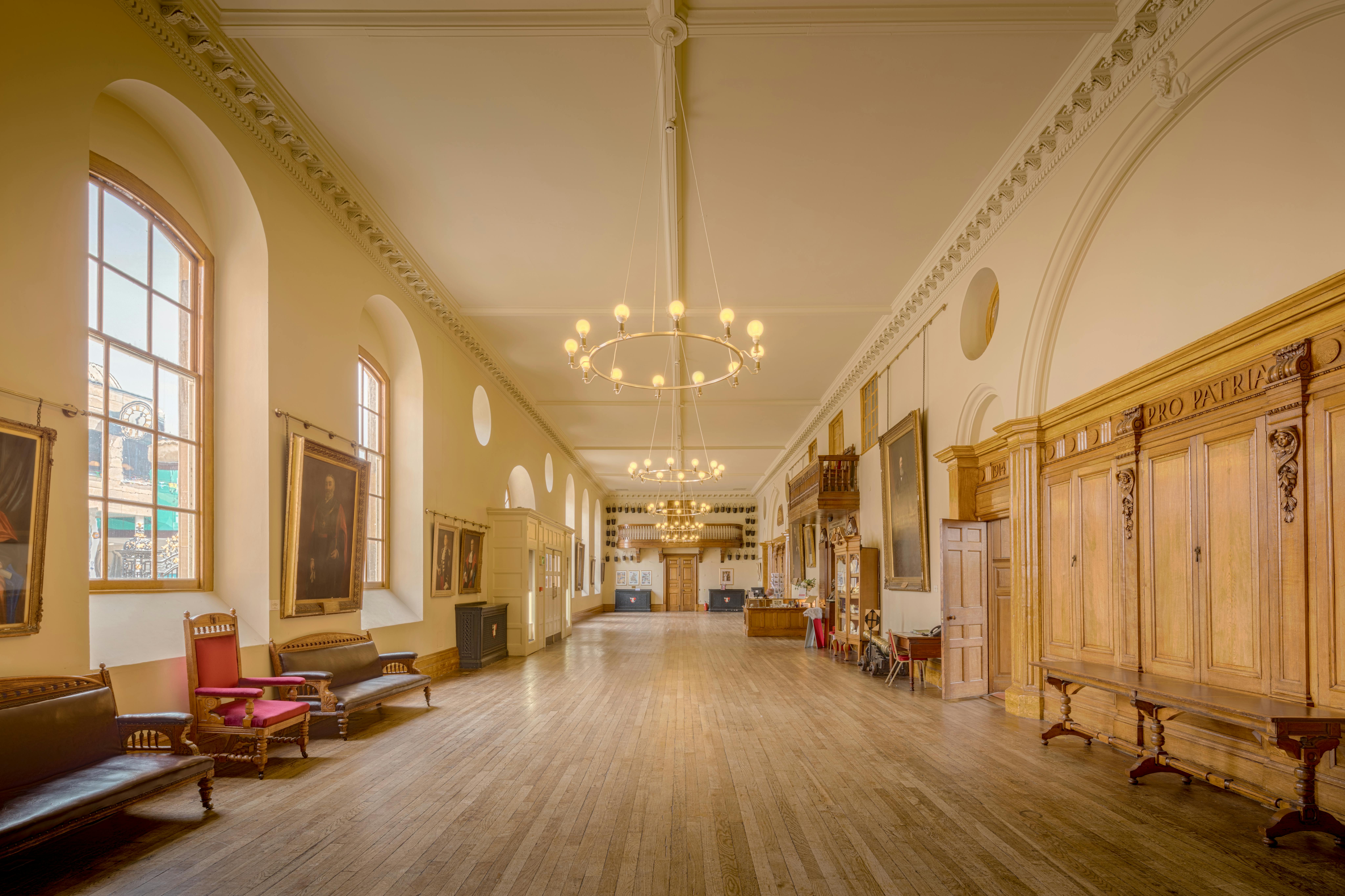
Venue visits concentrate on rooms. The parts that determine whether a day runs smoothly are usually outside the building, at the two ends of the event.
Arrival happens in a compressed window
Guests do not arrive evenly. Almost everybody turns up within a twenty-minute window before a stated ceremony time.
That concentration is what overwhelms an approach road, a single-track lane or a car park sized for average use rather than peak.
The effect is a queue at exactly the moment when nothing can be delayed, since the ceremony start is usually the one fixed point in the day.
Parking is a capacity question, not an amenity
The relevant figure is not how many spaces exist but how many vehicles a hundred guests arrive in, which depends on how far they have travelled.
Local guests share cars; distant guests arrive individually from hotels. The same guest count can mean very different vehicle numbers.
Overflow arrangements need to be real. A field that becomes unusable in wet weather is not parking, and a nearby street may have restrictions on a weekend.
The last mile is where people get lost
Rural venues are frequently mislocated by navigation apps, and the final turning is often unmarked. Guests then arrive late in a scattered stream.
Venues that know this usually have a standard set of directions they give out. Asking for it, and sending it, solves the problem almost entirely.
Mobile coverage is worth checking on the visit. Where there is none, guests cannot look anything up once they have left the main road.
Departure is harder than arrival
At closing, a large group leaves at once, in the dark, after drinking, and needs transport that has to reach the venue and turn around.
Rural locations rarely support that. Taxis may need booking days ahead, and a venue an hour from a town may have very few vehicles available at midnight.
The workable solutions are booked coaches on a schedule or accommodation on site. Both need arranging early, and both need telling guests about in advance.
Accessibility applies to the route, not just the building
A venue can be accessible inside and still be reached only by gravel, a slope or a long walk from parking.
That distance is what determines whether older guests and wheelchair users can attend comfortably, and it is easy to miss on a visit in good weather.
Asking whether a vehicle can drop someone directly at the entrance is a more useful question than asking whether the venue is accessible.
Questions readers ask
Is a package always more expensive?
Not once you cost everything a blank canvas requires, including hire, staffing, facilities and coordination. The comparison only works when both are fully costed.
Can we use a blank canvas venue without a coordinator?
It is possible with enough time and a reliable group of helpers, but somebody has to run the setup and the day. If that person is you, plan on being unavailable for most of your own morning.