Venues
Ceilings, Light and Why Rooms Photograph So Differently
Two rooms of equal size can produce entirely different photographs. Ceiling height, window position and artificial light do most of the work a couple credits to decor.
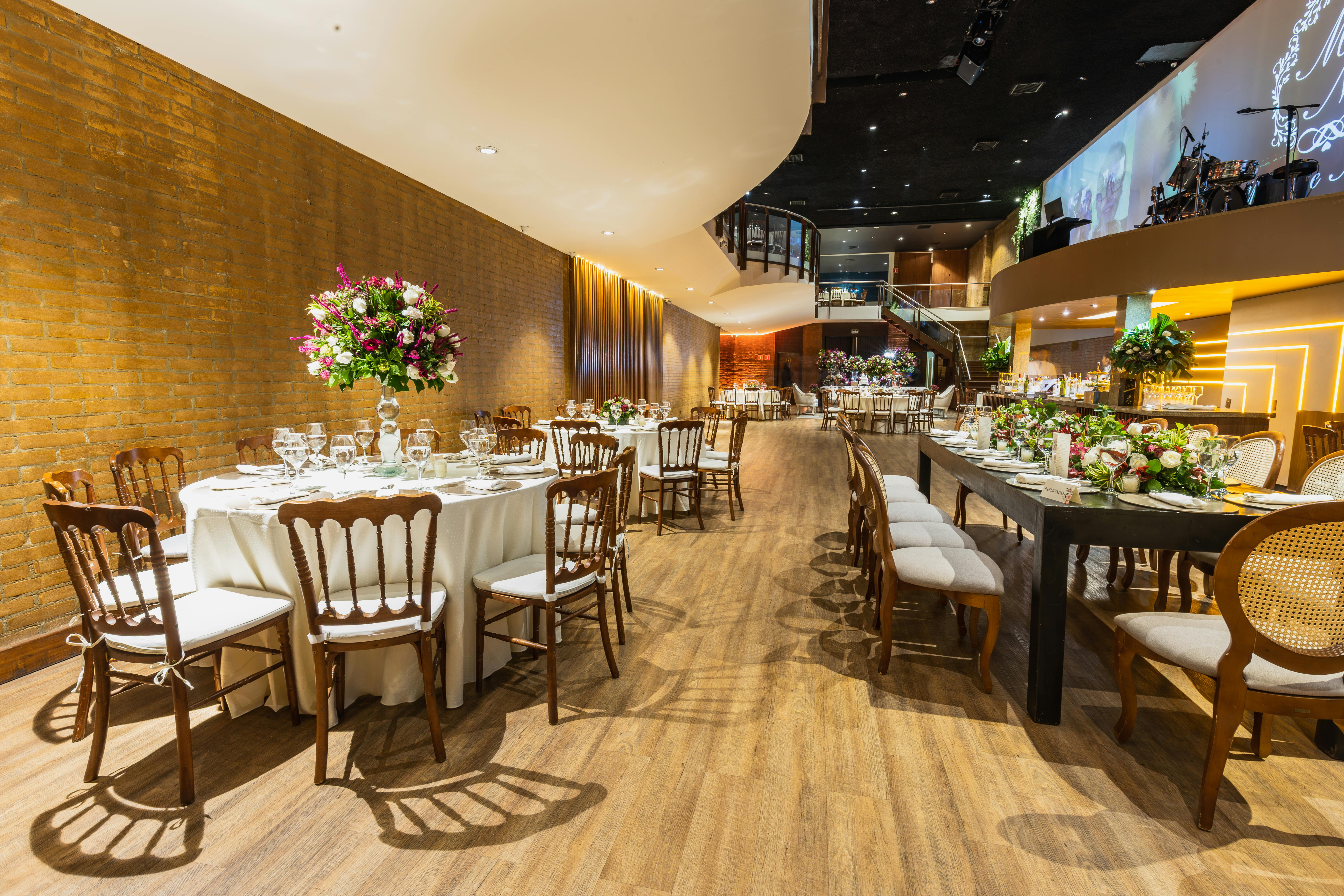
Couples choose venues partly from photographs and are sometimes surprised by their own. The difference usually comes from light rather than from styling.
Window position sets the quality of daylight
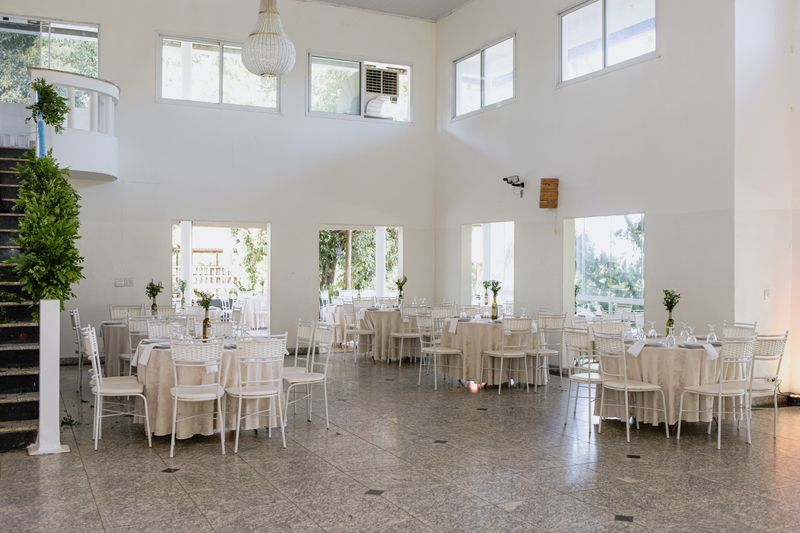
Large windows on one side of a room produce directional light that falls off quickly, which is flattering near the window and dim at the far end.
Windows on opposing sides give more even illumination, which is easier to work with across a whole room full of people.
Orientation matters as much as size. A room facing the afternoon sun behaves completely differently at four o'clock from one facing away.
Ceiling height changes the light and the sound
High ceilings let light bounce and diffuse, which softens shadows. They also make a room feel larger than its floor area suggests.
Low ceilings bounce light back onto faces, which can be helpful, but they also make artificial lighting harder to conceal and reflections harder to avoid.
The same geometry drives acoustics. Tall hard-surfaced rooms carry sound and blur speech, which is why speeches often struggle in exactly the rooms that photograph best.
Wall and ceiling colour tints everything
Light reflecting off a coloured surface picks up that colour before it reaches a face. Strongly painted rooms produce a cast across every photograph taken in them.
Green is the common culprit outdoors, where light filtering through foliage tints skin in a way that is difficult to correct fully.
Photographers can compensate, but compensation has limits when several different colour sources are present in one frame.
Evening light is a separate decision
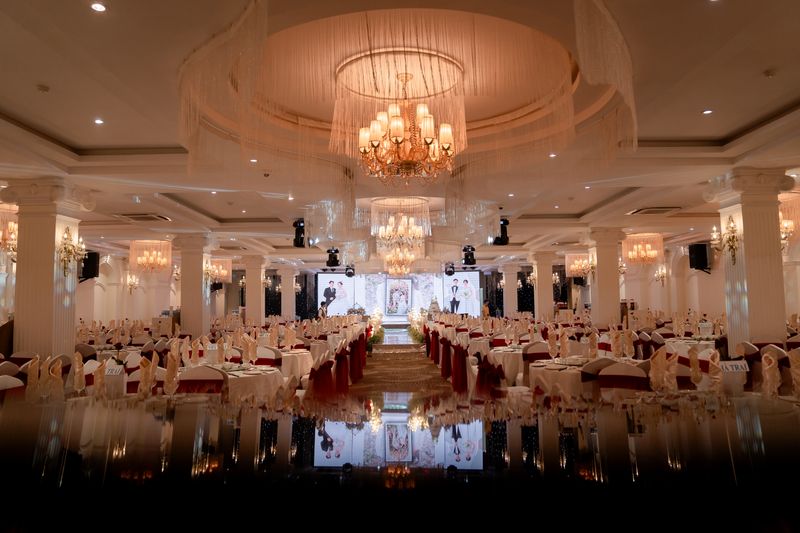
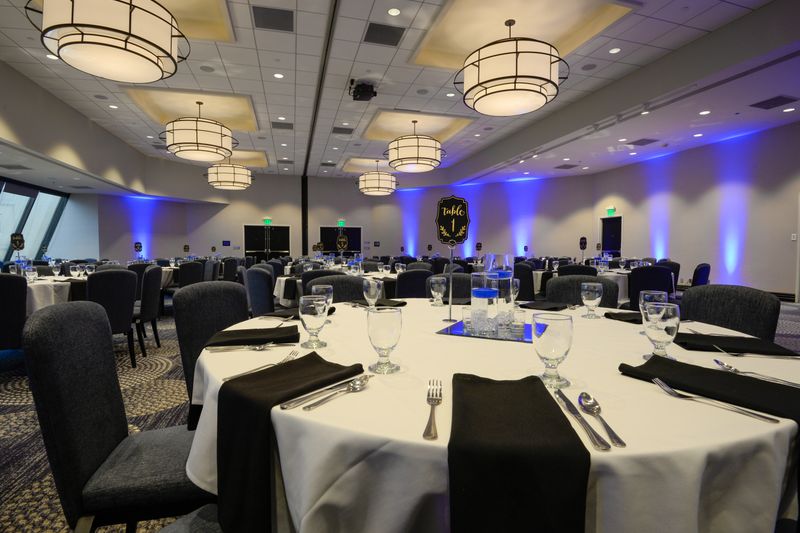
Once daylight has gone, the room is whatever the fittings make it. That is a fixed property of the venue unless lighting is brought in.
Overhead spotlights create harsh shadows on faces. Warmer, lower light sources produce a far better result and are what most venues add for evening receptions.
Asking to see the room after dark, or at least photographs taken there in the evening, tells a couple more than any daytime visit.
Mixed light sources are the hardest case
Trouble arrives when daylight, warm room lighting and coloured effect lighting are all present at once, because each has a different colour.
No single correction fixes all three, so something in the frame will be off. This is why disco lighting during a first dance produces unpredictable results.
Discussing it with the photographer at a venue visit is the point at which it can still be changed. Afterwards it is a matter of working around the room as it is.
Questions readers ask
Is a package always more expensive?
Not once you cost everything a blank canvas requires, including hire, staffing, facilities and coordination. The comparison only works when both are fully costed.
Can we use a blank canvas venue without a coordinator?
It is possible with enough time and a reliable group of helpers, but somebody has to run the setup and the day. If that person is you, plan on being unavailable for most of your own morning.