Ceremonies & Rituals
Rituals That Honour Parents and Elders, and Why They Matter
Many traditions contain a moment where the couple formally acknowledge the generation above them. It is often the part families remember longest.
What follows is the working version of rituals honouring family elders: the decisions in the order you actually meet them, with the reasoning attached.
Before you start
- Tea ceremonies, bowing rites and blessings recur across East and South Asian traditions.
- Order of seniority is usually prescribed rather than casual.
- These rites frequently matter more to families than the main ceremony.
Why these rites exist
Marriage in most traditions joins families rather than only individuals, and a rite acknowledging that is close to universal in some form. The rites usually run in one direction, with the couple offering respect and the elders responding with blessing.
They tend to be shorter than the main ceremony and are frequently the moment at which older relatives are visibly moved. Where a family feels a wedding has neglected them, it is often because a rite of this kind was omitted or rushed. Including one costs very little time and does a great deal of relational work.
The Chinese tea ceremony
The couple serve tea to parents and other elders, kneeling or bowing according to family practice, and addressing each by their new family title. The order follows seniority, beginning with the most senior relatives, and getting the order right is part of the respect being shown. Elders receive the tea and typically respond with a red envelope or a piece of jewellery, and words of advice or blessing.
It commonly takes place at home, sometimes at both families' homes on the same day, rather than at the wedding venue. For families in the diaspora it is frequently the element retained when much else has changed.
Bowing and offering rites in other East Asian traditions
In Korean practice the pyebaek is held after the main ceremony, with the couple bowing formally to the family in traditional dress. Dates and chestnuts feature in the rite, traditionally thrown for the bride to catch, with an association with children and future generations. Vietnamese weddings commonly include a ceremony at the family's ancestral altar, where the couple make offerings and inform the ancestors of the marriage.
Japanese Shinto weddings include a shared cup rite, san-san-kudo, in which the couple and in some forms the families drink in a prescribed pattern. In each case the form is precise, and families will usually direct the couple through it rather than expecting them to know.
South Asian and other forms
Touching the feet of elders to receive blessing is widespread across South Asian communities, and appears at many points during a wedding. In many Hindu weddings the giving of the daughter by her father or guardian is a formal rite, though its practice and framing vary between communities.
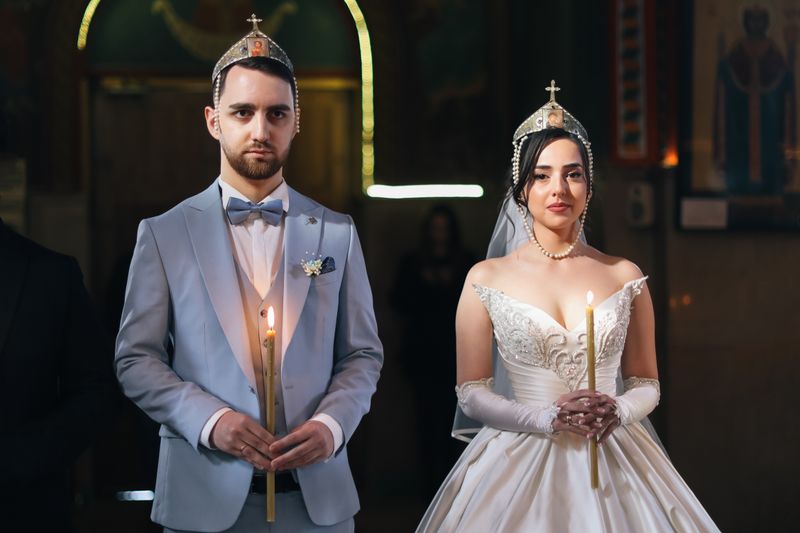
In several traditions the couple seek blessings from elders individually after the ceremony, which takes considerable time and should be scheduled. Filipino weddings assign formal roles to principal and secondary sponsors, who place a veil, a cord and light candles for the couple.
The specific forms differ enormously, and the underlying function of acknowledging the older generation is remarkably consistent.
Getting the details right
Ask the family, not the internet, since the order of seniority, the form of address and the exact gestures are family and regional matters. Write down the order of people in advance, because doing it wrong in the moment is genuinely awkward and is remembered. Allow far more time than seems necessary, as these rites involve many individual interactions rather than a single collective moment.
Consider elders who cannot kneel, stand for long or climb steps, and arrange the space so nobody is excluded by the layout. Where a parent has died, ask the family how they would like that acknowledged, since most traditions have a way of doing so.
Quoted costs rarely include service charges, taxes or overtime, and all three arrive later.
Where families come from different traditions
Where the two families have different rites of this kind, performing both is usually better received than choosing one. They are often short enough that including both costs very little, and the symmetry matters to everyone watching. Explain each briefly to the other side's guests, who will otherwise see an unfamiliar ritual without knowing what it means.
Where a rite involves a religious element that one family cannot participate in, arrange it so nobody is placed in an impossible position. These rites are frequently where a blended wedding either works or fails in the eyes of the older generation.
The takeaway
Ask the family for the order and the form, and give the rite more time than the schedule suggests it needs.
Decide early, decide once, and stop reopening it.
Questions readers ask
What if one of our parents has died?
Most traditions have an established way of acknowledging this, whether through a photograph, an empty place, a candle or an offering. Ask the family rather than improvising, as the customary form usually helps.
Can these rites be held separately from the wedding?
Frequently yes, and many are traditionally held at home rather than at the venue. Holding them separately often gives them the time and quiet they deserve.
Also by Preeti Ramnani
- Anand Karaj: How a Sikh Wedding Is Actually StructuredCeremonies & Rituals
- The Nikah: Consent, Witnesses and the Mahr ExplainedCeremonies & Rituals
- Christian Wedding Ceremonies Differ Far More Than Most People ExpectCeremonies & Rituals
- Building a Guest List by Rule Instead of by ArgumentGuests & Etiquette