Ceremonies & Rituals
Processions, Entrances and How a Couple Arrives
How the couple reaches the ceremony is not staging. In many traditions the arrival is itself a rite, with rules about who leads and who is met.

This is written to be used rather than admired. Each section below is a decision about wedding processions and arrivals, and each one has a default.
Before you start
- Arrival rituals often involve a formal meeting between families.
- Who accompanies whom carries meaning and varies by tradition.
- Processions need rehearsal, timing and a clear route.
The arrival as a rite in itself
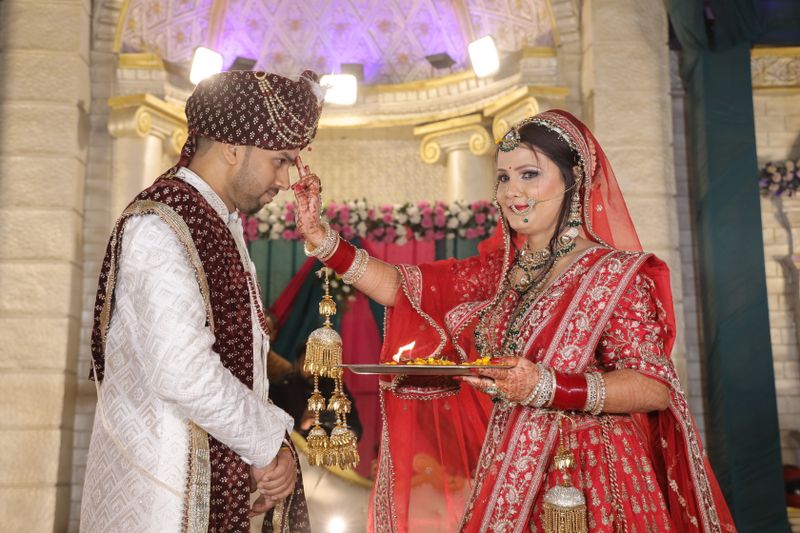
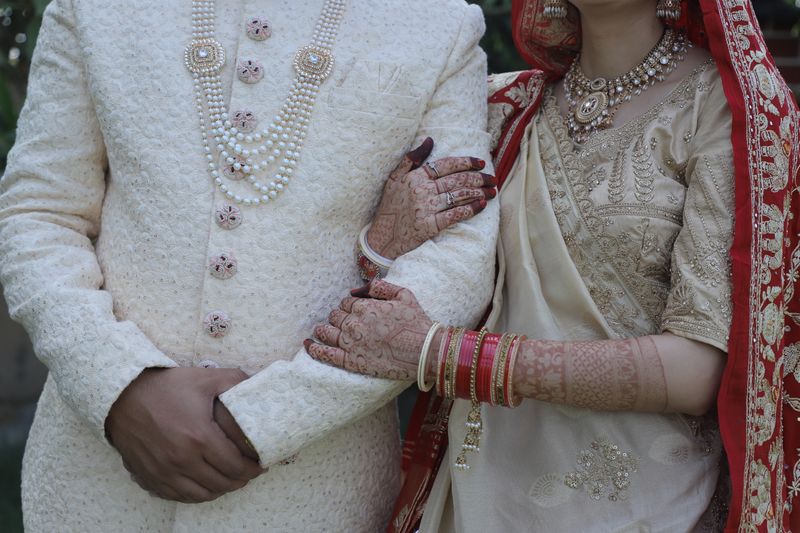
In many traditions the journey to the ceremony is a public event, with music, accompaniment and a formal reception at the other end. The baraat, the groom's procession in many North Indian and Pakistani traditions, travels with music and dancing to the wedding venue.
It is met by the bride's family, and in many communities a milni follows, in which relatives from each side are formally introduced and greeted. The point is that two families are meeting publicly rather than that one person is arriving, which is why the greeting is structured. Similar arrival customs appear across many cultures, from processions with drummers to the ceremonial fetching of the bride.
Who walks with whom
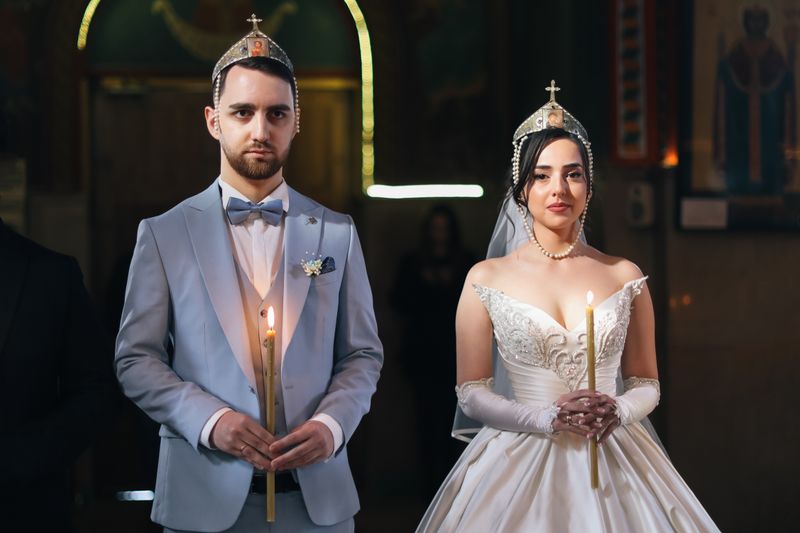
In many Western Christian and civil ceremonies one party processes down an aisle, traditionally accompanied by their father. That convention is increasingly varied, with couples walking together, being accompanied by both parents, or walking alone by choice. In Jewish practice both parties are commonly accompanied by their parents to the chuppah, which changes the shape of the entrance entirely.
Between the two families, where family situations are complicated, this is one of the most emotionally loaded decisions in the whole ceremony. Deciding it early, and telling the people concerned yourselves, prevents it becoming a discovery on the day.
Games, gates and negotiations
Several traditions include a playful obstacle at the door, in which the arriving party must negotiate with the other family before entering. In Chinese practice door games at the bride's home are a well-established custom, with the groom's party asked to prove themselves before proceeding. In many North Indian weddings the bride's sisters and cousins block the way or hide the groom's shoes, with a customary settlement to follow.
Once the deposit is paid, these are genuine traditions with social meaning about the two families' relationship, rather than modern entertainment. They also take time, which is worth building into the schedule rather than treating as an unexpected delay.
Garlands, gifts and greetings
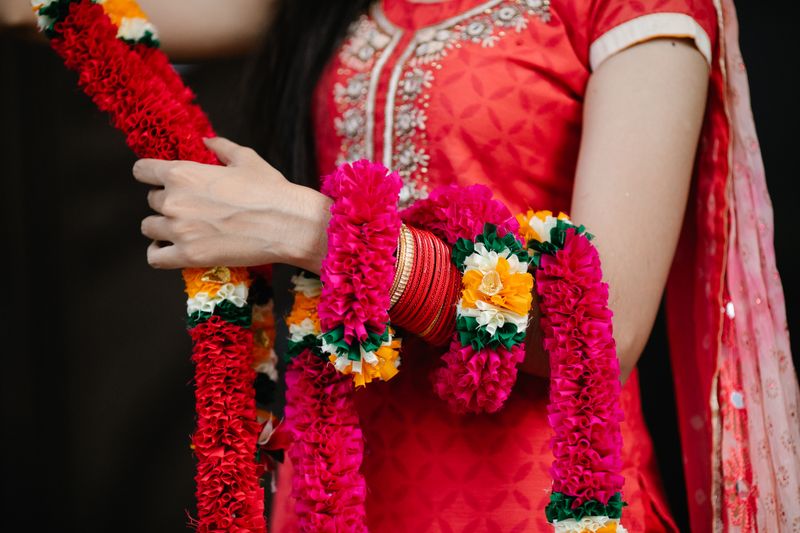
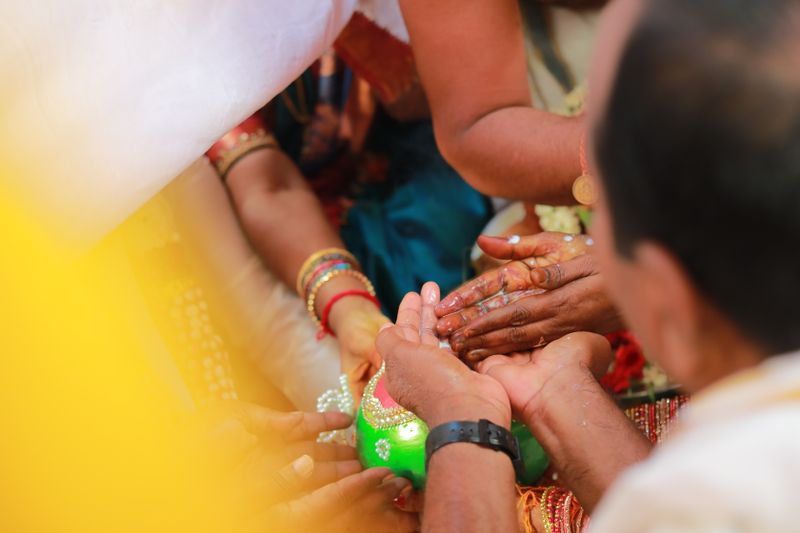
The exchange of garlands, the jaimala or varmala, is widespread in Hindu weddings and often the first moment the couple meet publicly on the day. In many traditions gifts pass between the families at the point of meeting, and the form of these is prescribed by custom. Elders are frequently greeted individually and in order of seniority, which takes longer than any schedule allows for.
On the day itself, photographers should know which of these moments matter, because they happen once and cannot be repeated.
Ask the family which greetings are expected, since omitting one is noticed far more than any decoration.
The practical side
Processions need a route, a start point, a person leading and someone at the back making sure nobody is left behind. Where music is involved, the musicians set the pace, and a procession moves considerably more slowly than people expect. Road closures, permissions and traffic may be relevant for a procession on a public street, and this varies by locality.
Rehearse anything with a sequence, particularly where children are involved, since nobody should be learning their part during the ceremony. Build twice the time you think the arrival needs, because it is the segment that most reliably overruns.
Nobody executes the plan exactly, and guests do not notice the parts that slipped.
Making guests part of it
Guests who understand what they are watching participate; guests who do not simply stand and wait for something to happen. A short explanation, spoken or printed, of what the procession is and what the greeting means changes the atmosphere completely.
The decision that unlocks the rest: where guests are invited to join a procession or a dance, say so explicitly, because people from other traditions will not assume they are included. Consider older guests and anyone with limited mobility, since a long procession on foot excludes them from a central part of the day. An arrival that everyone can follow is one of the most memorable parts of any wedding.
The takeaway
The arrival is usually two families meeting in public, and planning it as a rite rather than an entrance changes how it feels.
Decide early, decide once, and stop reopening it.
Questions readers ask
Do we have to be given away?
No. It is a convention in some traditions and absent in others, and many couples now walk together or with both parents. Decide what represents your families rather than following a form you do not hold to.
How long should we allow for a procession?
Considerably more than the walking time. Music sets the pace, greetings take longer than expected, and the formal meeting of relatives at the other end is an event in itself.