Guests & Etiquette
Phones and Cameras: Setting a Policy Guests Will Respect
Unplugged ceremonies work when guests understand the reason. The problem is not photography itself but where guests stand and what they block during the key moments.
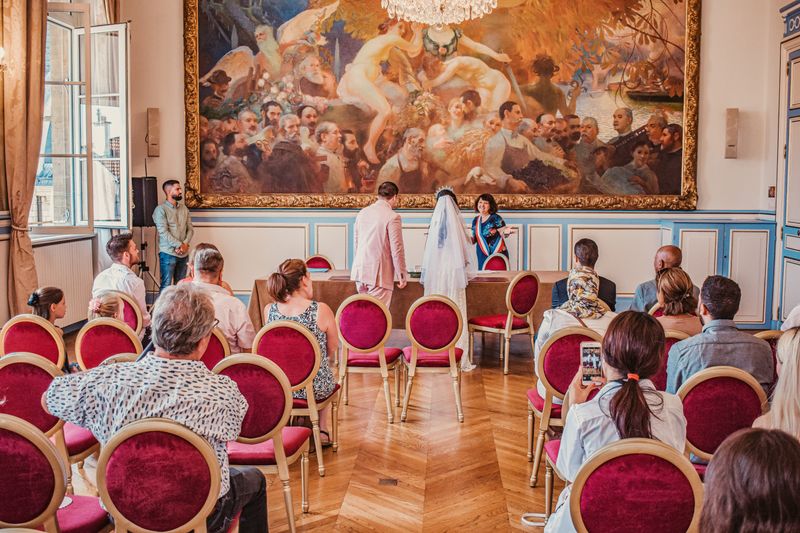
Nearly every guest carries a camera, and the resulting behaviour affects the ceremony directly. The policies that work explain a reason rather than issue a rule.
The problem is position, not photography
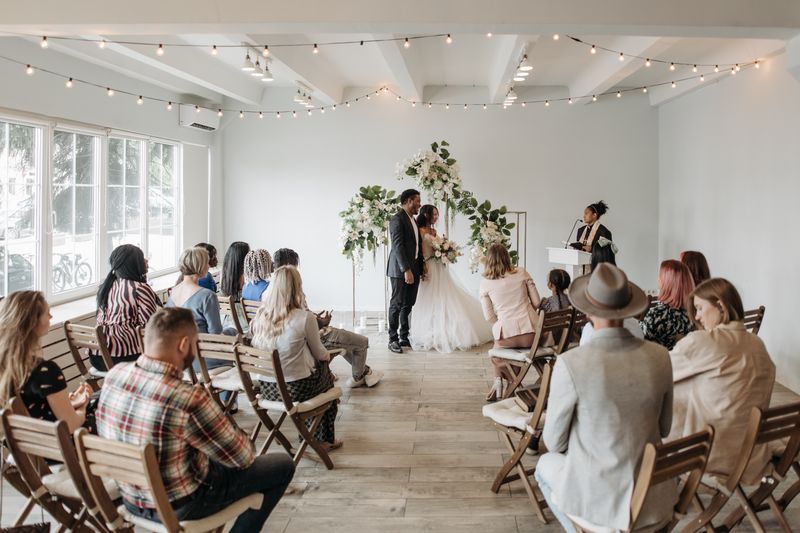
A guest taking a photograph from a seat causes no difficulty. The difficulty comes from stepping into the aisle, which is where the professional photographer is working.
Processional shots are the usual casualty, because that is the moment guests most want and the moment the aisle must be clear.
Framing the request around the aisle and the ceremony space is more effective than banning devices, because it names the actual behaviour.
Screens change what photographs look like
A row of raised phones appears in every wide shot, and faces behind screens are not faces. The record of the ceremony ends up documenting the recording.
This is the reason couples give and it lands well, because guests recognise it once described. Most people have seen the effect in someone else's photographs.
It is also why the request is usually limited to the ceremony. Guest photography during the reception adds material the professional cannot cover.
The message has to arrive before the day
A sign at the door is read by some guests and missed by others, and by then people are already seated with phones out.
Saying it on the invitation, and having the officiant repeat it at the start, covers everyone who will be in the room.
The officiant's version is the one that works, because it arrives seconds before the behaviour and comes with authority the couple cannot exercise directly.
Social media is a separate question
Photography and publication are different decisions, and a couple may be relaxed about one and not the other.
Requests about posting need to be specific about timing, since the common concern is images appearing before the couple has seen any of their own.
Guests with children, or in professions with privacy constraints, may have their own reasons for not wanting images shared. Neither side should assume.
Collecting guest photographs is worth arranging
Guests capture the parts a photographer misses: the tables, the conversations, the late evening after the professional has left.
Those images are usually scattered across phones and never gathered. A single shared album, set up in advance, collects most of them.
Asking on the day works better than asking afterwards, because the intention to send photographs fades within about a week of any event.
Questions readers ask
Do we have to invite people who invited us to their wedding?
In many communities the expectation is strong and ignoring it has consequences. Elsewhere it is a courtesy rather than an obligation. Ask your family what is expected where you are.
Can we invite colleagues to the evening only?
In places where that distinction is normal, yes, provided you apply it to all colleagues equally. Where it is not a recognised practice, it will read as a partial invitation.
Also by Preeti Ramnani
- Anand Karaj: How a Sikh Wedding Is Actually StructuredCeremonies & Rituals
- The Nikah: Consent, Witnesses and the Mahr ExplainedCeremonies & Rituals
- Christian Wedding Ceremonies Differ Far More Than Most People ExpectCeremonies & Rituals
- Rituals That Honour Parents and Elders, and Why They MatterCeremonies & Rituals