Guests & Etiquette
Plus-Ones: Setting a Policy and Applying It to Everybody
There is no universal rule about partners, so you have to make one. The only requirement is that it applies without exception.

This is less a set of instructions about plus-one invitations than an argument, and it is worth saying so at the start.
The argument in brief
- Consistency matters more than which rule you choose.
- Name partners on the invitation where you know them.
- Ambiguous invitations produce awkward assumptions.
Why a policy is necessary
Without a stated rule, every partner becomes an individual decision, and individual decisions produce visible inconsistency. Guests compare notes, and two people in similar situations receiving different invitations is what causes lasting resentment. A policy also gives you a short answer when asked, which is far easier than defending a judgement about somebody's relationship.
It does not have to be generous to be fair, and guests generally accept a clear rule even when it excludes them. What they do not accept is the sense that a decision was made about them personally.
Common rules and what they cost
Inviting all partners is the simplest rule and the most expensive, since each one is a full guest with a full cost attached. Inviting partners of anyone married, engaged or living together is common and has the advantage of being verifiable rather than a matter of judgement. Some couples invite partners only where they know the person, which is defensible but requires you to apply it strictly.
On the run sheet, inviting no partners at all is workable for a small wedding but should be stated clearly rather than implied. Any of these works; the failure mode is having no rule and deciding case by case.
Naming people properly
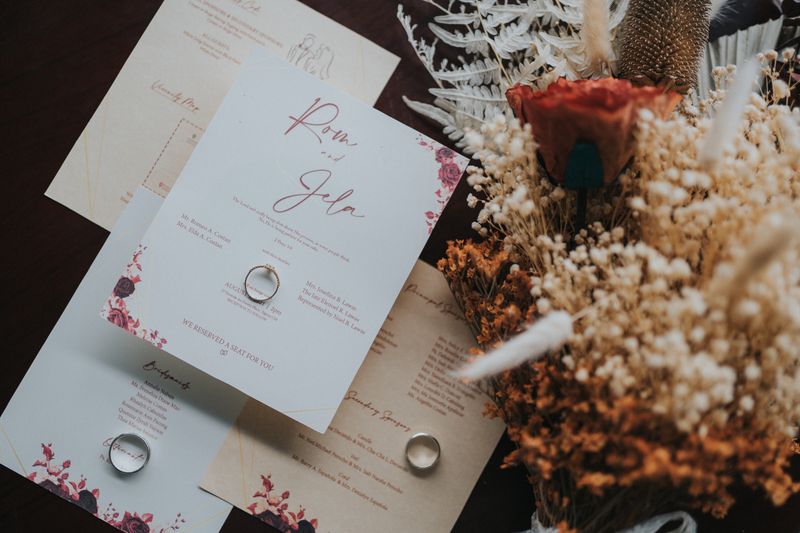
Where you know a guest's partner, write their name on the invitation rather than adding a generic plus one. Naming makes the invitation unambiguous and is noticeably warmer to the person being named. Where you do not know the name, asking the guest before the invitations are printed is easy and avoids an awkward blank.
On the day itself, an invitation addressed only to one person is an invitation to one person, though many guests will not read it that way. Where the rule excludes partners, saying so explicitly in the accompanying information prevents an uncomfortable correction later.
The awkward cases
Someone in a new relationship will ask, and the answer should follow your rule rather than your assessment of the relationship. A guest who will know nobody else is the strongest case for an exception, and it is one you can make into a rule of its own. Long-distance guests travelling a long way to attend are another common exception, and again it can be stated as a category.
Any exception you make should be expressible as a rule, or it is simply an inconsistency waiting to be discovered.
If you cannot phrase it as a rule, it probably should not be made.
Communicating it
Say what the position is in the information accompanying the invitation, rather than hoping the addressing carries the message. A single line explaining that numbers are limited and that you have had to restrict invitations is enough and is well understood. Do not apologise at length, since that suggests the decision is negotiable and invites people to test it.
Six months out, where someone asks anyway, repeat the rule warmly and briefly rather than explaining the reasoning again. Most people ask once and accept the answer immediately.
Nobody executes the plan exactly, and guests do not notice the parts that slipped.
Cultural expectations
In some communities inviting couples and families as units is the norm, and inviting one member of a household is unusual and can offend. In others individual invitations are entirely normal and nobody expects a partner to be included automatically. Where the two families come from different expectations, agree the rule between you before either family is told.
It is worth asking older relatives what is normal in your community rather than assuming the practice you have seen elsewhere. The rule can differ between the two sides if that reflects genuine cultural difference, provided it is consistent within each.
The takeaway
Pick any rule you like about partners, then apply it to every single person it covers.
Protect the hour you will actually remember and let the rest be approximate.
Questions readers ask
Do we have to invite partners we have never met?
That depends on the rule you set and on what your community expects. Many couples invite established partners regardless of acquaintance, which is easier to apply than a familiarity test.
A guest has asked to bring someone. How do we say no?
Repeat the rule briefly and warmly, without offering the reasoning again. A clear short answer is easier for them to accept than an apologetic one that sounds negotiable.
Also by Preeti Ramnani
- Anand Karaj: How a Sikh Wedding Is Actually StructuredCeremonies & Rituals
- The Nikah: Consent, Witnesses and the Mahr ExplainedCeremonies & Rituals
- Christian Wedding Ceremonies Differ Far More Than Most People ExpectCeremonies & Rituals
- Rituals That Honour Parents and Elders, and Why They MatterCeremonies & Rituals