Guests & Etiquette
Getting Guests Home Safely at the End of the Night
A wedding encourages drinking and then disperses everyone into cars, and the arrangements that prevent harm have to be made before the evening, not during it.
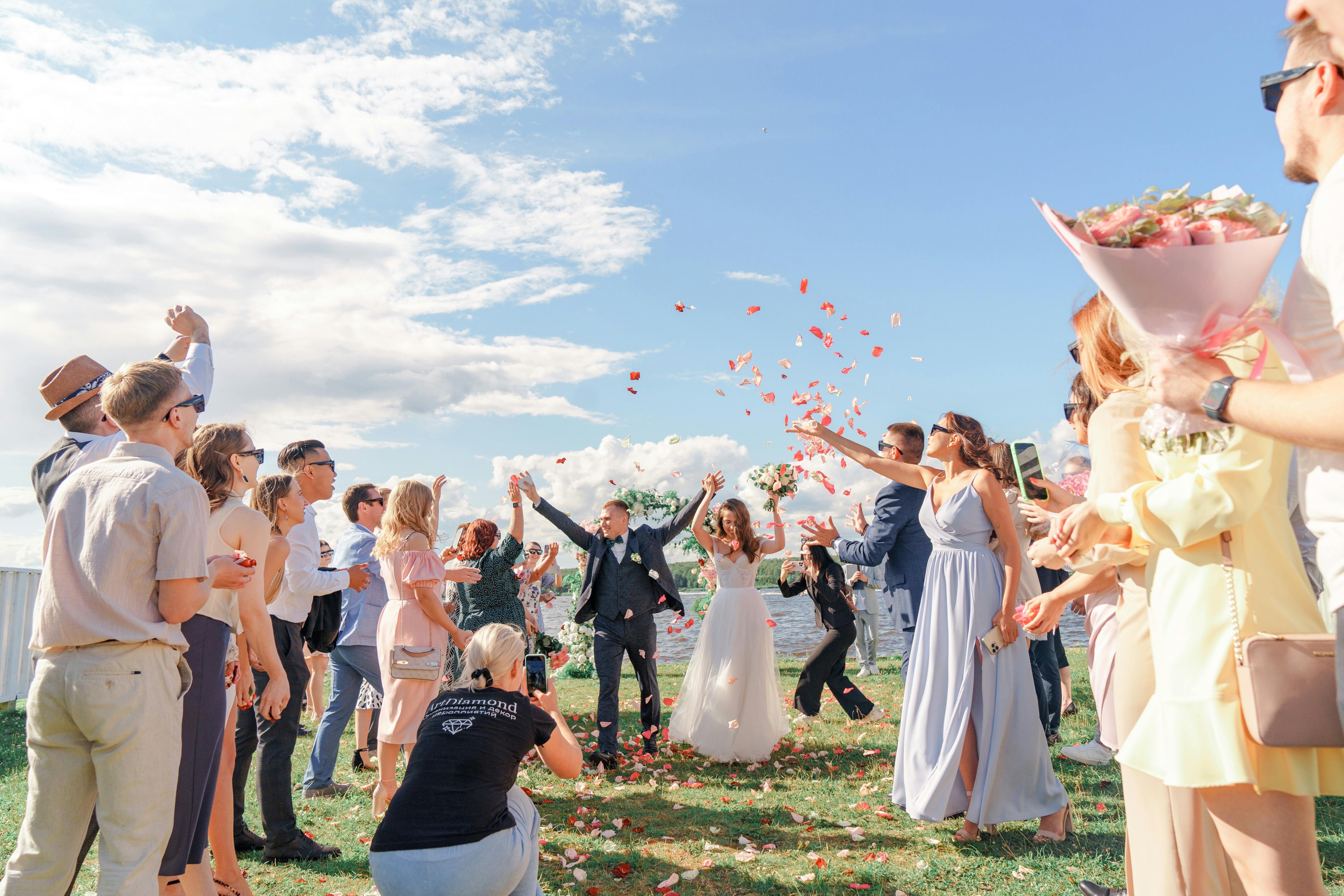
A reception is designed to encourage people to drink and then ends by sending them all outside at once. The transport arrangement is part of the event design, not an afterthought.
The risk concentrates in one hour
Guests leave within a short window at the end, and the number of people making a judgment about whether to drive peaks all at the same moment.
Rural and suburban venues make this sharper, since there is no walking option and rideshare coverage thins outside dense areas.
Late endings compound it, because availability of any transport falls at exactly the hour it is needed most.
Shuttles work because they are the default
A shuttle between the venue and one or two hotels removes the decision entirely for guests who took it there.
Scheduling matters more than capacity. A single departure at the end forces everyone onto one bus, while two or three runs spread across the last hours let people leave when they want.
Publishing the times in advance, on the website and printed on the tables, is what turns a booked shuttle into a used one.
Rideshare needs help in most locations
Venues outside city centers may have few drivers available late, and guests standing in a parking lot discovering that is a poor outcome.
Some couples arrange a local taxi or car service to hold vehicles for the end of the evening, which is a reservation rather than a hope.
A clear pickup location, with lighting and an address that mapping applications recognize, prevents the situation where drivers cancel because they cannot find the entrance.
How the bar is run affects how people leave
Closing the bar some time before the event ends, and serving coffee and food afterwards, changes the state guests are in when they walk out.
Professional bartenders will refuse service to someone who has had too much, which is one of the reasons venues require licensed servers.
Food available late does more than anything else on the schedule, and it is also the part guests remember fondly, which makes it an easy addition.
Somebody sober has to be watching
The couple will not be tracking who is getting into which car, and neither will the wedding party.
Asking two people who are not drinking to keep an eye on departures gives the evening a backstop, and they should be told explicitly that they can take someone's keys.
Having a plan for a guest who should not drive, a spare hotel room, a ride, a couch, means the answer exists before anyone has to invent one at midnight.
Questions readers ask
Do we have to invite people who invited us to their wedding?
In many communities the expectation is strong and ignoring it has consequences. Elsewhere it is a courtesy rather than an obligation. Ask your family what is expected where you are.
Can we invite colleagues to the evening only?
In places where that distinction is normal, yes, provided you apply it to all colleagues equally. Where it is not a recognised practice, it will read as a partial invitation.
Also by Preeti Ramnani
- Anand Karaj: How a Sikh Wedding Is Actually StructuredCeremonies & Rituals
- The Nikah: Consent, Witnesses and the Mahr ExplainedCeremonies & Rituals
- Christian Wedding Ceremonies Differ Far More Than Most People ExpectCeremonies & Rituals
- Rituals That Honour Parents and Elders, and Why They MatterCeremonies & Rituals