Guests & Etiquette
Addressing Invitations When Names Are Complicated
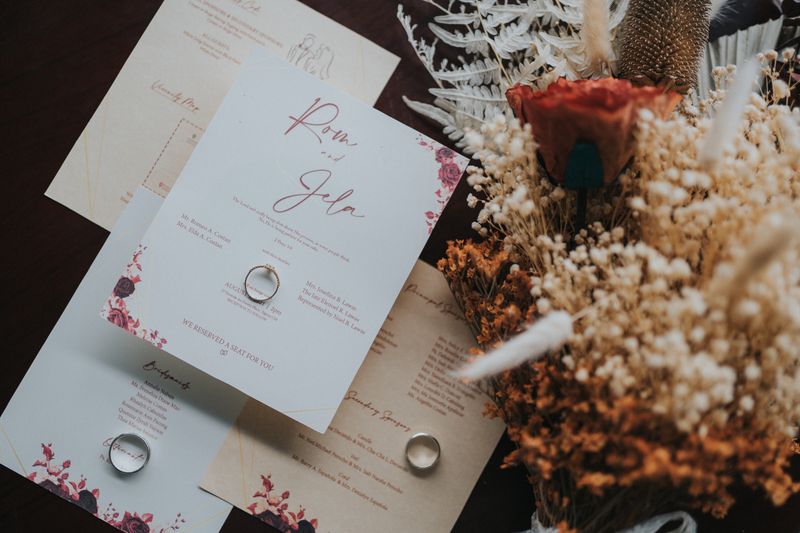
Envelope conventions were built for a narrower range of households than exist now, and the workable rule is to address people as they identify themselves.
Addressing wedding invitations is where traditional etiquette collides with how families actually look. The conventions are inherited, and applying them mechanically produces errors.
The old formulas encoded a specific household
Traditional forms assumed a married couple sharing a surname, with the wife's given name absent from the envelope entirely.
Many people now find that erasure uncomfortable, and it simply does not describe households where partners kept their own names or are not married.
The modern default writes both people's full names, which is clear, respectful and works for almost every configuration without special handling.
Titles are the part that goes wrong
Professional and academic titles matter to some guests and not to others, and getting them wrong is noticed by the people who care.
Where both members of a couple hold a title, both are used. Where a guest uses a gender-neutral honorific, it should be used rather than substituted.
The reliable method is asking rather than guessing, which can be folded into the address collection so it does not become a separate conversation.
The envelope defines who is invited
Names on the envelope are the guest list, and this is the mechanism by which children and plus-ones are included or not.
Listing only the adults' names indicates an adults-only invitation, and adding and family does the opposite. Guests read this correctly more often than they are given credit for.
Where a plus-one is offered and the partner's name is known, using the name is better than writing and guest, which reads as an afterthought to the person it names.
Households with different surnames and structures
Blended families, unmarried partners, adult children living at home and multi-generational households all break simple formulas.
- Adult children receive their own invitation, at their own address if they have one
- Unmarried partners living together are named on the same line or on separate lines
- Widowed guests are addressed as they now introduce themselves
- Guests in the middle of a divorce are addressed separately
Each of these is a small decision, and each is noticed by the person receiving it, which is why the list is worth reviewing rather than merged automatically.
Consistency matters more than tradition
The thing guests actually compare is how they were addressed relative to somebody else, not whether the form matched an etiquette manual.
Choosing one convention and applying it to the whole list avoids the appearance that some households were treated more formally than others.
Where a specific guest's preference conflicts with the house style, the guest's preference wins. Nobody has ever been offended by being addressed the way they asked to be.
Questions readers ask
Do we have to invite people who invited us to their wedding?
In many communities the expectation is strong and ignoring it has consequences. Elsewhere it is a courtesy rather than an obligation. Ask your family what is expected where you are.
Can we invite colleagues to the evening only?
In places where that distinction is normal, yes, provided you apply it to all colleagues equally. Where it is not a recognised practice, it will read as a partial invitation.
Also by Preeti Ramnani
- Anand Karaj: How a Sikh Wedding Is Actually StructuredCeremonies & Rituals
- The Nikah: Consent, Witnesses and the Mahr ExplainedCeremonies & Rituals
- Christian Wedding Ceremonies Differ Far More Than Most People ExpectCeremonies & Rituals
- Rituals That Honour Parents and Elders, and Why They MatterCeremonies & Rituals