Ceremonies & Rituals
Handfasting, Sand and the Newer Rituals Couples Add
Invented ceremony rituals have spread because civil weddings are short and structurally thin. They work when they give guests something to watch and fail when they only fill time.
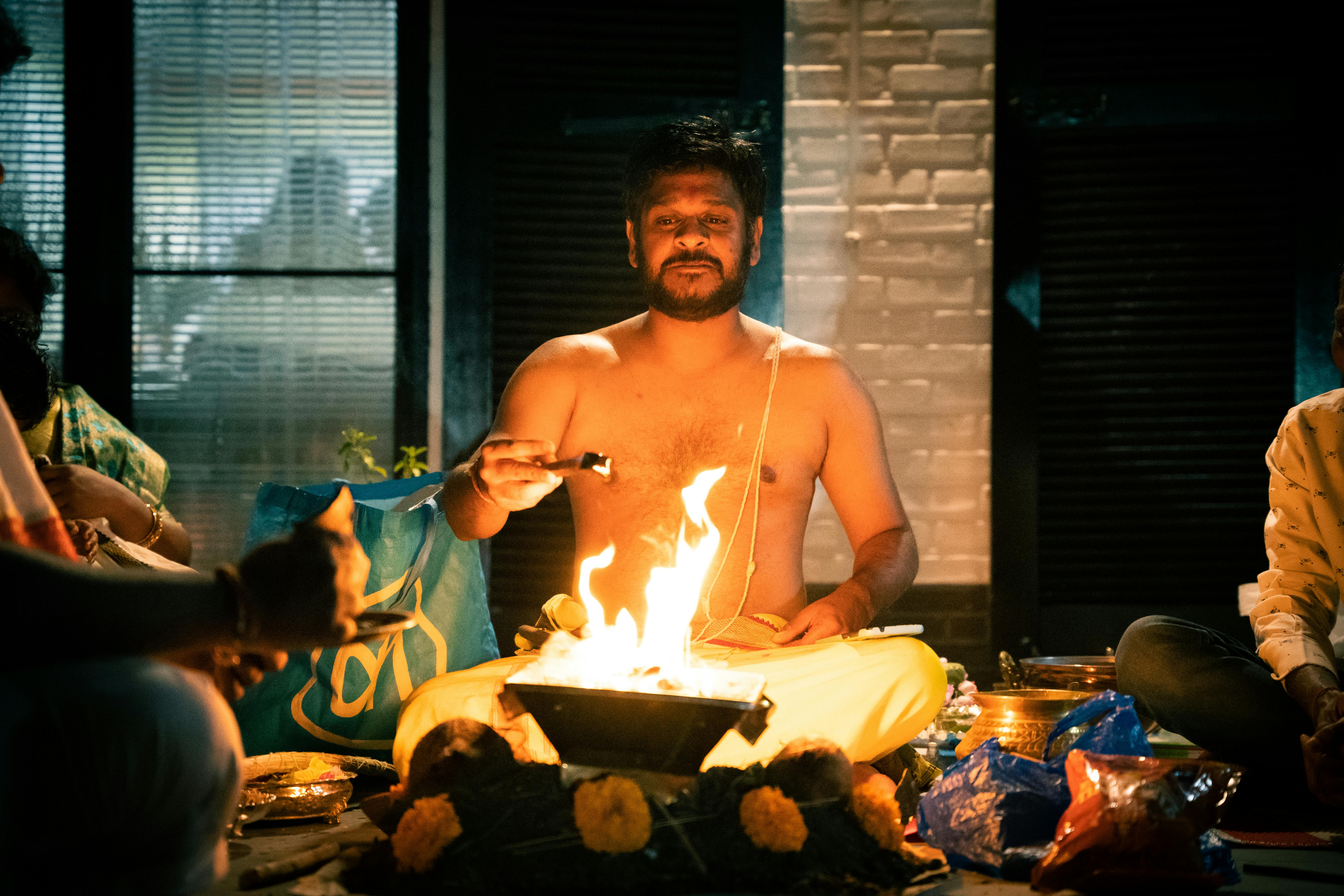
Unity candles, sand blending, handfasting cords and tree planting have all become common additions to modern ceremonies. They exist because the civil ceremony left a gap.
Civil ceremonies are deliberately minimal
A legally sufficient marriage takes very little. Declarations, consent, witnesses and a signature can be completed in a handful of minutes.
That brevity is a feature of the law, not a design for guests. A ceremony that ends almost as soon as people have sat down feels insufficient to the occasion.
Couples without a religious framework therefore have a structural problem: they want a ceremony that feels substantial and have inherited very little material to build one from.
Added rituals fill the gap with action
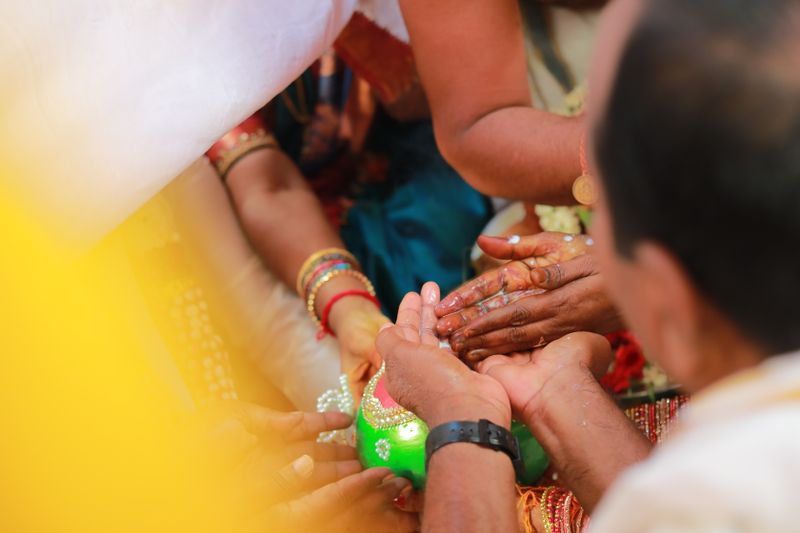
The successful additions share a shape. Something is done, by the couple, with their hands, in front of everyone, and it takes long enough to be watched.
Handfasting binds the couple's hands with cord while words are spoken. Sand ceremonies pour two colours into one vessel. Both make a claim about joining that guests can see rather than hear.
The reason they work is the same reason older rituals work. A physical act is easier to follow than a paragraph of speech and lands with people at the back.
Some additions are borrowed and some are not
Handfasting has genuine historical roots in parts of Europe, though the version performed today is largely a modern reconstruction. That is not a criticism, but it is worth knowing.
Other elements are borrowed from living traditions that are not the couple's own. Taking a rite out of the community that practises it can read as thoughtless to guests who recognise it.
The safer route is either to use something the couple has an actual connection to, or to build something specific to them rather than adopting an unfamiliar form wholesale.
Family involvement is often the real purpose
Many of these rituals are structured to include others. Parents pouring sand, siblings tying cords, or children joining a blended-family element give people a defined role.
That solves a common problem: relatives who feel peripheral at a ceremony where the legal action involves only two people and an officiant.
It works best when the role is small and clearly explained beforehand. A relative improvising at the front of a silent room is the usual failure.
The test is whether it says something
A ritual added purely to lengthen the ceremony is visible as such. Guests can tell the difference between a moment with weight and one filling a gap in a running order.
The useful question is what the couple would say the act means if asked afterwards. If the answer is thin, the ceremony is usually better without it.
A short ceremony done well is not a failure. Length is not what makes the day feel serious, and most guests remember tone rather than duration.
Questions readers ask
Why are there no vows exchanged?
The commitment is expressed through the Laavan and the couple's assent before the Guru Granth Sahib. The hymns describe the union rather than the couple promising things to each other in the Western form.
Can the Anand Karaj be held outside a gurdwara?
It can where the Guru Granth Sahib can be installed and treated with the required respect, which is a significant practical undertaking. Discuss it with the gurdwara well in advance.
Also by Preeti Ramnani
- The Nikah: Consent, Witnesses and the Mahr ExplainedCeremonies & Rituals
- Christian Wedding Ceremonies Differ Far More Than Most People ExpectCeremonies & Rituals
- Rituals That Honour Parents and Elders, and Why They MatterCeremonies & Rituals
- Building a Guest List by Rule Instead of by ArgumentGuests & Etiquette