Planning & Timeline
Who Does What on the Morning of the Wedding
The morning is the least planned and most fragile part of a wedding day. It fails on unassigned small tasks rather than on anything anybody would call a problem.

Most planning effort goes into the parts of the day guests see. The morning, which determines whether those parts start on time, is usually left to sort itself out.
The morning is a delivery operation
Before anyone is dressed, a set of physical tasks has to happen: flowers arrive, suppliers are let in, rings and documents are located, transport is confirmed.
None of these are difficult. They fail because they are assumed rather than assigned, and because the people best placed to do them are also getting ready.
Writing the tasks down as a list with a name against each is the whole intervention. It takes twenty minutes and removes most of the morning's failure modes.
The couple should not be holding anything
Anyone getting ready cannot also be answering the door, taking supplier calls or hunting for a missing buttonhole. The two roles conflict directly.
Handing over a phone to a designated person is the cleanest version of this. Suppliers get a number that will be answered, and the couple gets left alone.
That person needs the supplier list, the venue contacts and the running order. Without them they are a message relay rather than someone who can resolve anything.
Getting ready takes longer than the quoted time
Hair and makeup schedules are usually built from per-person durations that assume everyone is present, ready and sitting down when called.
In practice people are eating, dressing, taking calls or absent. The slippage is small each time and cumulative across a group.
The standard fix is to schedule the couple earlier in the sequence than feels necessary, so that the person whose timing matters most is not the one absorbing the delay.
Food is the thing everyone forgets
The gap between an early breakfast and a reception meal is often eight hours or more, and it runs through the most demanding part of the day.
People who have not eaten are more emotional, more forgetful and more likely to feel unwell during a long ceremony where nobody can sit down.
Someone needs to be responsible for food arriving, not merely for it being available. Left to itself, it does not get eaten.
Where everything is has to be decided in advance
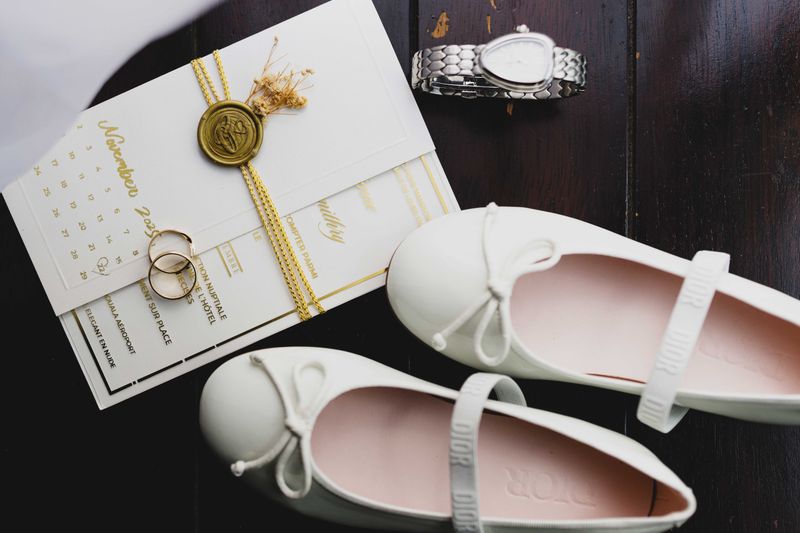
Rings, documents, speech notes, payments for suppliers and anything being handed over during the day need a fixed location and a person who knows it.
Splitting these across bags and cars is how they get lost. A single container that travels with a named person is more reliable than a shared understanding.
Documents in particular are worth checking the night before. A certificate requirement discovered on the morning is a problem with no available solution.
Questions readers ask
Do we need a run sheet for a small wedding?
A short one, yes. Small weddings have fewer lines but the same joins, and with fewer helpers a missing owner is more obvious rather than less.
Who should hold the run sheet if we have no coordinator?
Someone who is not in the wedding party and not making a speech. The role needs to be free to walk away and chase something without being missed.
Also by Aparna Kulkarni
- Planner, Coordinator or Venue Manager: Three Jobs People Keep ConfusingPlanning & Timeline
- Decision Fatigue Is the Real Cost of Planning a WeddingPlanning & Timeline
- The Planning Document That Replaces Nineteen Browser TabsPlanning & Timeline
- Planning a Wedding When Half the Family Lives on Another ContinentPlanning & Timeline