Planning & Timeline
Save-the-Dates and When They Should Go Out
A save-the-date exists to protect a calendar, so its timing is set by how far ahead guests need to make travel and time-off decisions.

A save-the-date does one job: it claims a date on a guest's calendar before anything else does. Its timing follows from what guests must arrange, not from custom.
The lead time is set by travel and time off
Guests flying to a wedding need to request time off, book flights and arrange care for children or animals, and those decisions are made months ahead.
A local wedding with no travel needs less warning than one requiring a flight and two nights in a hotel, which is why one universal timeline does not fit.
Destination weddings and holiday weekends sit at the far end, because airfare and lodging both rise and both sell out well before the date.
Sending too early has its own cost
A save-the-date sent very far out risks being forgotten, and it locks in a guest list before the couple knows what the venue and budget will support.
That second problem is the serious one. Anyone who receives a save-the-date must receive an invitation, so the list is effectively final at that moment.
Couples who send before the guest list is settled create the situation where somebody has to be uninvited, which is not recoverable gracefully.
It carries less information than people think
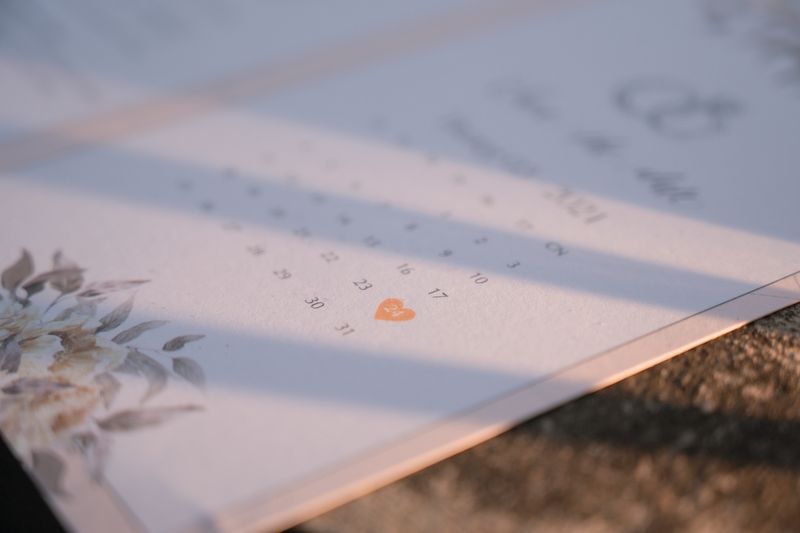
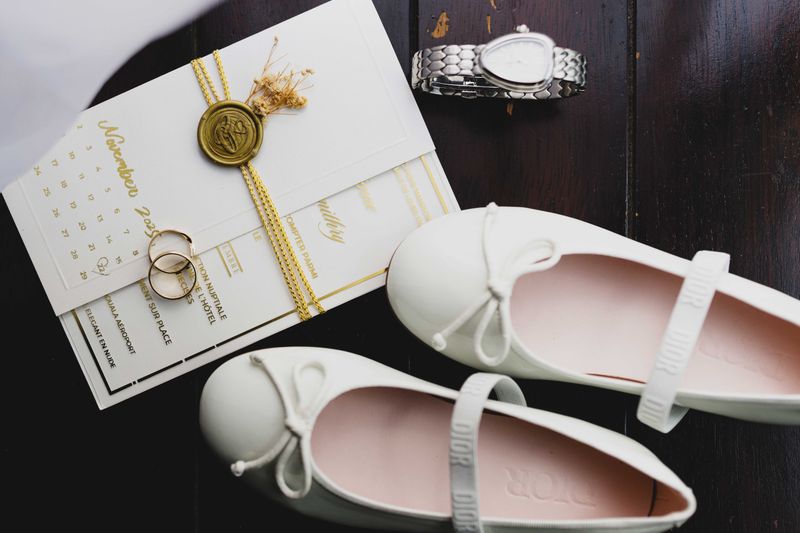
A save-the-date needs the names, the date, the city and a note that an invitation follows. It does not need the schedule or the dress code.
Adding a website address is the one useful extension, because it gives guests somewhere to check as details firm up.
Times, venue addresses and reception details belong on the invitation, which comes later and reflects decisions that have actually been made.
Not everyone needs one
Save-the-dates are most valuable for guests who must travel and for anyone whose calendar fills far ahead. Local guests can often be served by the invitation alone.
Sending only to those who need them saves money, but it creates a visible difference between guests, and people compare notes.
Most couples send to the whole list for that reason, treating the cost as the price of not having to explain the distinction.
What has to be true before you send
Three things should be settled: the date is contractually held, the venue is booked, and the guest list is complete enough that nobody will be removed.
A held date without a signed contract is not a date, and couples who send on a verbal hold occasionally have to retract, which is worse than sending late.
Addresses also have to be collected by then, which is the step that consumes more time than expected and is the usual reason a mailing slips by weeks.
Questions readers ask
Do we need a run sheet for a small wedding?
A short one, yes. Small weddings have fewer lines but the same joins, and with fewer helpers a missing owner is more obvious rather than less.
Who should hold the run sheet if we have no coordinator?
Someone who is not in the wedding party and not making a speech. The role needs to be free to walk away and chase something without being missed.
Also by Aparna Kulkarni
- Planner, Coordinator or Venue Manager: Three Jobs People Keep ConfusingPlanning & Timeline
- Decision Fatigue Is the Real Cost of Planning a WeddingPlanning & Timeline
- The Planning Document That Replaces Nineteen Browser TabsPlanning & Timeline
- Planning a Wedding When Half the Family Lives on Another ContinentPlanning & Timeline