Planning & Timeline
Keeping a Decision Log So Choices Stay Decided
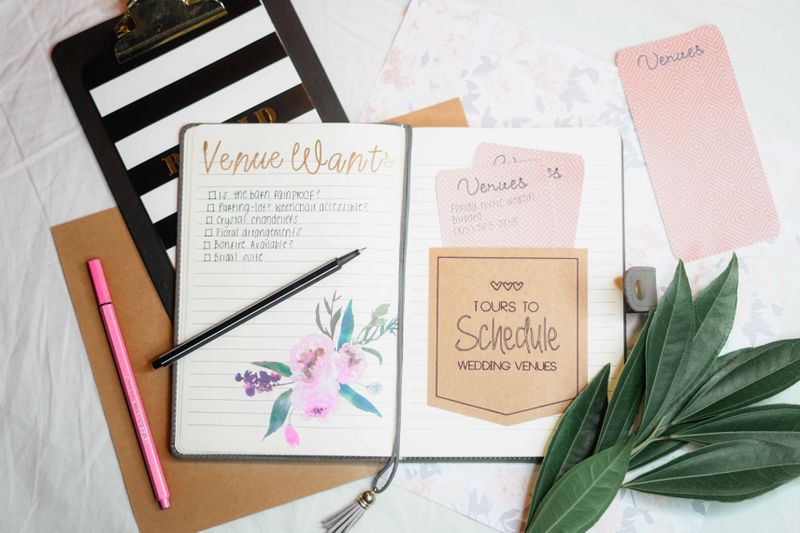
Wedding planning stalls because settled decisions get reopened. A written record of what was decided, when and why converts arguments into a lookup.

Long planning periods produce a specific problem: decisions that were made months ago come back. A written log is the cheapest available fix.
Decisions decay without a record
A choice made in conversation exists only in memory, and memory diverges. Two people can leave the same discussion with different accounts of what was agreed.
Months later, neither can reconstruct the reasoning. The decision then has to be made again, usually with less information than the first time.
Writing down what was decided and the reason behind it means the second conversation starts from a fact rather than from two impressions.
The reasoning matters more than the outcome
A log that records only conclusions still leaves the argument open, because anyone can propose reversing a conclusion whose basis is unstated.
Recording why is what closes it. A note that a venue was chosen for accessibility rather than appearance settles a later suggestion to move for a prettier room.
It also helps when circumstances change. If the reason no longer holds, the decision genuinely should be revisited, and the log makes that visible.
Family suggestions have a natural home
Relatives reopen decisions in good faith, usually because they were not present when the choice was made and have no way of knowing it was considered.
A log lets the answer be specific rather than defensive. Saying the option was considered and rejected for a stated reason ends most of these exchanges.
It also protects the couple from relitigating the same point with several people in turn, which is the mechanism that makes planning feel endless.
Suppliers rely on the same record
Verbal agreements with suppliers drift in exactly the same way. What was said on a call in spring is not reliably remembered by either side in autumn.
Confirming decisions by message after each conversation creates a shared record without any formality. It also surfaces misunderstandings while they are cheap.
Where a supplier's answer affects a contract or a price, the written trail is the only version that can be pointed to if the accounts differ later.
One log, one owner
The value collapses if there are several copies. Two documents diverge immediately and the group loses the single reference point that made the log work.
One shared file, editable by the people making decisions, is enough. Tooling is beside the point; the discipline of writing things down is what does the work.
The log also becomes the handover document in the final week, since it already contains most of what suppliers and helpers need to be told.
Questions readers ask
Do we need a run sheet for a small wedding?
A short one, yes. Small weddings have fewer lines but the same joins, and with fewer helpers a missing owner is more obvious rather than less.
Who should hold the run sheet if we have no coordinator?
Someone who is not in the wedding party and not making a speech. The role needs to be free to walk away and chase something without being missed.
Also by Aparna Kulkarni
- Planner, Coordinator or Venue Manager: Three Jobs People Keep ConfusingPlanning & Timeline
- Decision Fatigue Is the Real Cost of Planning a WeddingPlanning & Timeline
- The Planning Document That Replaces Nineteen Browser TabsPlanning & Timeline
- Planning a Wedding When Half the Family Lives on Another ContinentPlanning & Timeline