Planning & Timeline
Booking Order for Suppliers Whose Diaries Fill First
Suppliers should be booked in order of how scarce they are, not how exciting they are. Scarcity is set by how many weddings one supplier can physically take.

Couples generally book in the order things occur to them. A better ordering exists, and it follows from how many bookings each kind of supplier can take in a season.
Scarcity depends on capacity, not popularity
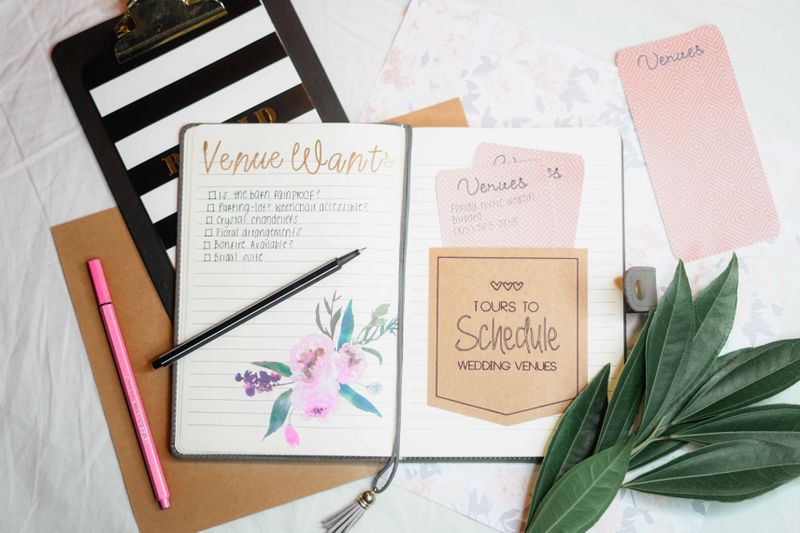
A venue can host one wedding a day. A photographer can shoot one. A band can play one. These are hard limits, and they make the date genuinely exclusive.
A florist, by contrast, can supply several weddings on the same day if the workshop has the staff. A stationer has no date limit at all until close to the deadline.
This single distinction sorts the list. One-per-day suppliers get booked early; capacity-scalable ones can wait without much risk.
The first three bookings determine the rest
Venue, date and officiant form a locked group. None of them can be settled independently, because each restricts the others.
Once those are fixed, everything else has a known date to be checked against, and enquiries become simple availability questions rather than negotiations.
Booking anything before this group is settled risks paying a deposit for a date that later has to move. Suppliers are often accommodating about this, but not always.
Some bookings depend on decisions not yet made
Catering usually cannot be finalised without the venue, because kitchen facilities, approved lists and exclusivity clauses all constrain who can cook.
Music depends on the space, the licence and the curfew. A band booked before the venue can turn out not to fit, physically or in terms of noise limits.
Attempting these early tends to produce a decision that has to be revisited. The sequence is not arbitrary; each step supplies information the next one needs.
Lead times are separate from availability
Some suppliers are available but need a long production window. Made-to-order clothing, printed stationery and anything bespoke has a manufacturing timeline attached.
These do not fill up the way a Saturday does, but the deadline is just as real. Missing it means paying for rush production or accepting a substitute.
The useful step is asking each supplier what their latest workable order date is, and putting that date rather than a vague intention into the plan.
Off-peak changes the ordering
Outside peak season the scarcity pressure largely disappears. Venues have dates, photographers have weekends, and the urgency to book eighteen months out is not there.
That creates room to make decisions in a more sensible order and to negotiate, since suppliers are filling gaps rather than choosing between enquiries.
The trap is assuming the relaxed timeline applies to everything. Legal notice periods and production lead times are unaffected by how quiet the season is.
Questions readers ask
Do we need a run sheet for a small wedding?
A short one, yes. Small weddings have fewer lines but the same joins, and with fewer helpers a missing owner is more obvious rather than less.
Who should hold the run sheet if we have no coordinator?
Someone who is not in the wedding party and not making a speech. The role needs to be free to walk away and chase something without being missed.
Also by Aparna Kulkarni
- Planner, Coordinator or Venue Manager: Three Jobs People Keep ConfusingPlanning & Timeline
- Decision Fatigue Is the Real Cost of Planning a WeddingPlanning & Timeline
- The Planning Document That Replaces Nineteen Browser TabsPlanning & Timeline
- Planning a Wedding When Half the Family Lives on Another ContinentPlanning & Timeline