After the Wedding
What to Do With Wedding Gifts You Cannot Use
Unwanted gifts are a predictable outcome of any registry, and handling them badly damages relationships. The workable approaches separate the object from the gesture.

Every wedding produces gifts the couple will not use. The volume is a function of how gift-giving works rather than a failure of anyone's judgement.
Gifts are given from the giver's frame
Guests who buy outside a registry are usually choosing something meaningful to them, or something they believe suits the couple.
That guess is made with limited information about the home, the existing possessions and the couple's taste, so a proportion will inevitably miss.
Cultural expectations add to it. In many traditions giving a physical item is required, and the choice is constrained by convention rather than by suitability.
The gesture and the object are separable
What matters socially is that the giver's effort is acknowledged, and that acknowledgement happens at the point of thanks rather than through permanent ownership.
Once thanked, the object's fate is a practical matter. Keeping something unused in a cupboard preserves nothing except the obligation.
The exception is anything with a personal history, such as an item made or inherited by the giver. That is a different kind of gift and it is not fungible.
Returning and exchanging has a time limit
Retailers apply return windows, and gift receipts are frequently included precisely because the giver anticipated a possible mismatch.
Registry purchases are usually the easiest to exchange, since the retailer expects it and often has a defined post-wedding period for it.
Delay is what forecloses the option. Gifts opened weeks later, and dealt with months after that, fall outside every window.
Passing things on works when it is discreet
Donating or regifting is entirely reasonable, and the only real risk is the giver encountering the item somewhere unexpected.
Keeping distance between the giver and the destination handles it, which usually means not passing something to a mutual friend or a shared charity shop.
Selling is a similar calculation, and where the item is genuinely valuable, doing it quietly and using the proceeds for something the couple needs is a defensible outcome.
The registry itself prevents most of this
Registries exist to solve this problem, and the mismatch rate falls sharply when one is provided and clearly signposted.
Including a wide price range matters, because guests who cannot find something at their intended spend will buy off-list instead.
Where a couple genuinely needs nothing, saying so directly and offering an alternative, such as a contribution or a charity, redirects the impulse rather than suppressing it.
Questions readers ask
How long do we have to send thank-you notes?
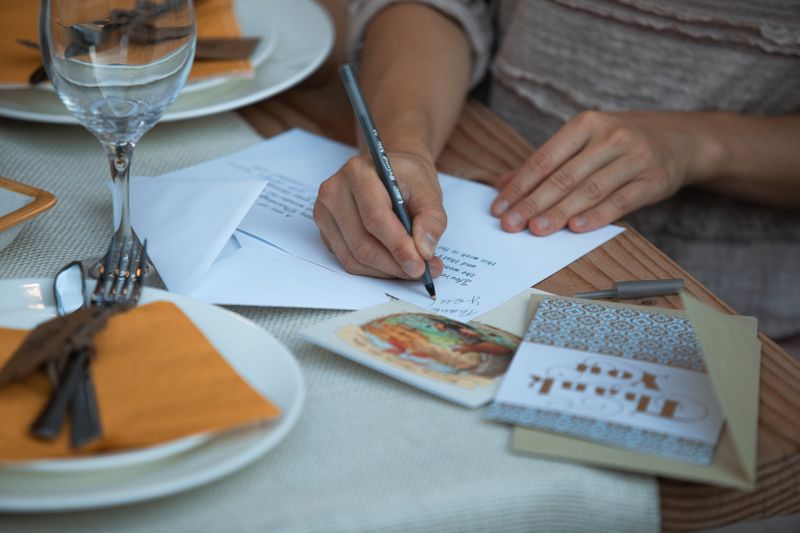
Conventions vary and none of them are enforced. Sooner is better because the details are fresher, but a note several months late is still very welcome.
Do we need to thank people who gave nothing?
Anyone who travelled a long way, helped in the planning or took on a role is worth thanking. Attendance often costs more than a gift, particularly for guests coming from abroad.
Also by Aparna Kulkarni
- A Run Sheet Is Not a Schedule, and the Difference Shows on the DayPlanning & Timeline
- Planner, Coordinator or Venue Manager: Three Jobs People Keep ConfusingPlanning & Timeline
- Decision Fatigue Is the Real Cost of Planning a WeddingPlanning & Timeline
- The Planning Document That Replaces Nineteen Browser TabsPlanning & Timeline