After the Wedding
A Thank-You System That Actually Gets Finished
The obstacle is never willingness. It is that the task has no structure, no list and no end, so it stays permanently in progress.

Treat the sections below as a sequence. With wedding thank-you notes, getting the early decisions right makes the later ones much easier.
Before you start
- The list must be built as gifts arrive, not reconstructed later.
- A small daily quota finishes faster than occasional long sessions.
- Specificity matters more than length.
Build the list as things arrive
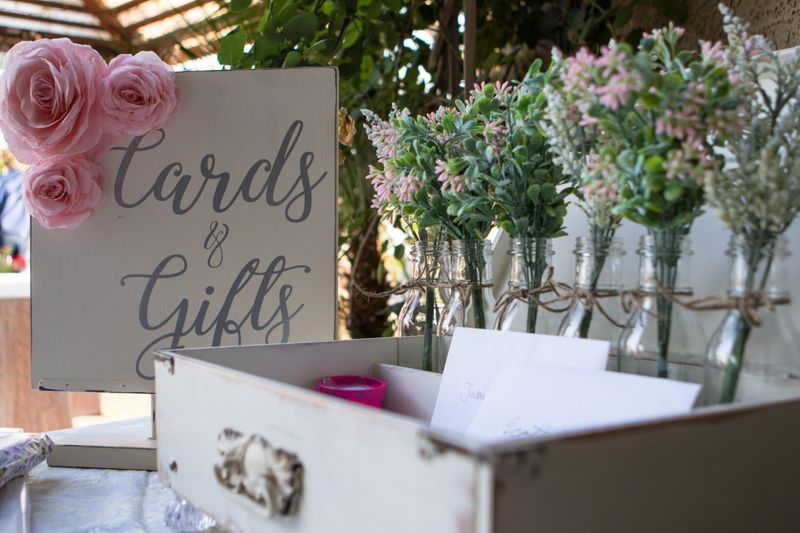
Start recording gifts from the first one that appears, with the giver, what it was and the date, in a single list. Gifts brought on the day are the ones most likely to be separated from their cards, so assign someone to keep the two together. Cards containing money need particular care and a named person responsible, decided before the wedding rather than during it.
Where something arrives unidentified, ask family promptly rather than guessing, since a wrongly addressed thank-you is worse than a late one. Reconstructing this list afterwards is the single largest reason thank-you notes are never finished.
Deciding the scope
Decide who is being thanked, which usually includes anyone who gave a gift, anyone who travelled far and anyone who did real work. Suppliers who went beyond what was contracted are worth a note too, and it means more to them than most couples realise.
People who helped in the months beforehand often get forgotten because their contribution was not on the day. Write the full list first so the task has a visible end, which is what makes it finishable. A defined list of eighty is far less daunting than an undefined pile of obligation.
Splitting the work
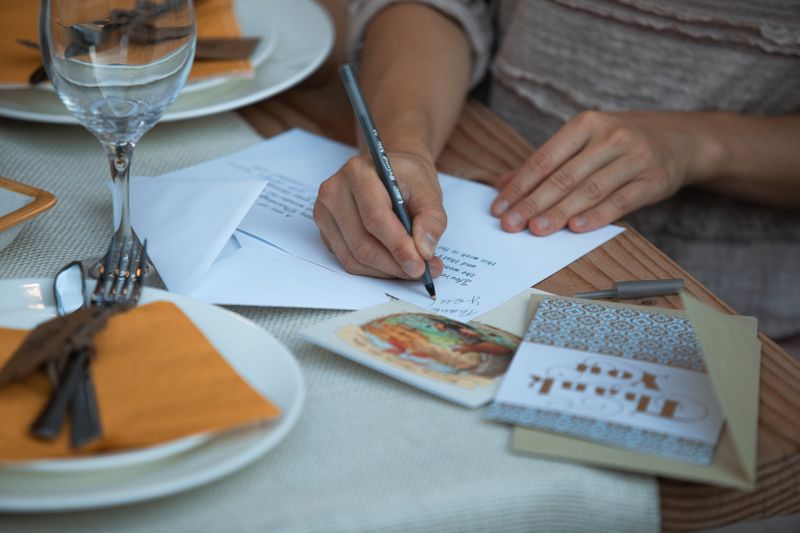
Divide the list between you by relationship, so each writes to their own family and friends and neither is writing to strangers. Doing them together at the same table is more effective than dividing them across separate weeks, because it becomes a shared activity. A small daily quota finishes the task faster than occasional long sessions, which are easier to postpone indefinitely.
On the run sheet, set a target date and put it in the diary, since a task with no deadline expands to fill the rest of your life. Most couples find the whole list takes far less time than the dread suggested.
What to write
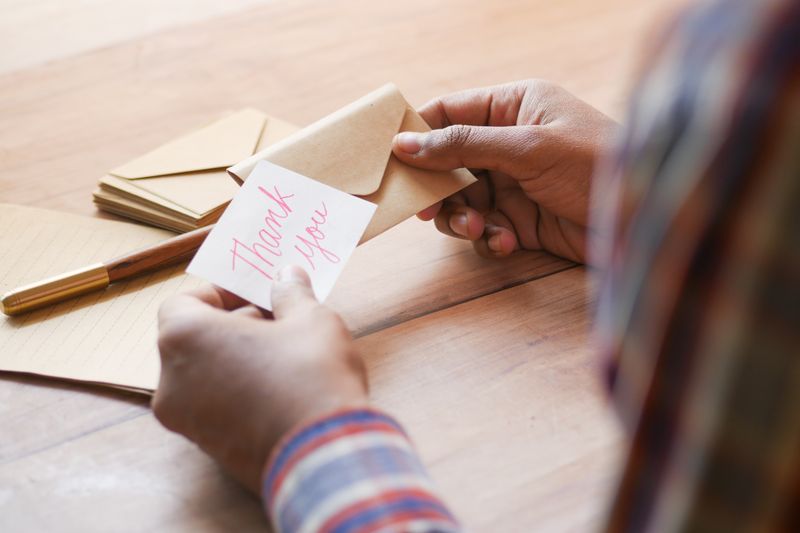
Name the specific gift and say something concrete about it, since a generic note is transparently generic to the person reading it. One sentence about the day itself, and one about seeing them there, is enough and is better than a page of general warmth. For guests who travelled, thank them for coming rather than for the gift, since the travel was the greater cost.
Six months out, where a group gave something together, individual notes are better received than one note to everyone.
Handwritten is customary in many places, though it matters more that it is personal than that it is handwritten.
Timing and expectations
Conventions about timing vary by culture, and in some communities the expectation is quite specific while in others it is loose. Sooner is better in every tradition, mainly because the details are still fresh enough to be specific. A late note is far better than no note, and nobody has ever been offended by receiving one after several months.
If you are travelling immediately afterwards, start when you return rather than trying to do it in the days before. The people who gave you something want to know it arrived and was appreciated, which is the whole content of the obligation.
Quoted costs rarely include service charges, taxes or overtime, and all three arrive later.
Cultural variations
In some communities the thanking is done in person or by a family visit rather than in writing, and the written note is unfamiliar. In others there are customary return gifts or reciprocal obligations that continue between families over time. Where gifts were recorded formally by the family, that record frequently informs future obligations and is kept accordingly.
Ask your family what is expected rather than importing a convention from elsewhere, since getting this wrong is noticed. Whatever the form, doing it promptly and specifically is what people actually respond to.
The takeaway
Build the list as things arrive, split it by relationship, and write a small number every day until it ends.
It is a party with paperwork attached. Keep them in that order.
Questions readers ask
How long do we have to send thank-you notes?
Conventions vary and none of them are enforced. Sooner is better because the details are fresher, but a note several months late is still very welcome.
Do we need to thank people who gave nothing?
Anyone who travelled a long way, helped in the planning or took on a role is worth thanking. Attendance often costs more than a gift, particularly for guests coming from abroad.
Also by Aparna Kulkarni
- A Run Sheet Is Not a Schedule, and the Difference Shows on the DayPlanning & Timeline
- Planner, Coordinator or Venue Manager: Three Jobs People Keep ConfusingPlanning & Timeline
- Decision Fatigue Is the Real Cost of Planning a WeddingPlanning & Timeline
- The Planning Document That Replaces Nineteen Browser TabsPlanning & Timeline